
Diplomacy
RoWorld diplomacy guide: how alliances remove fronts, what a truce buys you, the reported traitor penalty and how to survive a multi-front war.
Introduction
Diplomacy is the cheapest way to remove a front in RoWorld. Every alliance, truce or informal promise buys time that you can spend on economy, defense or a different war, and every broken promise has a cost that community guides describe but do not agree on precisely. The official description confirms that alliances are part of the game; the reported traitor mark and its duration come from community testing. This page focuses on the decision behind the deal: which front to remove, what the promise is worth, and how to avoid becoming the player everyone else agrees to eliminate. Because up to 55 players share a server and the victory condition is public, reputation is a real resource even when the game does not display it as a number.
Diplomatic Options at a Glance
| Option | What It Buys | What It Costs | Best Use |
|---|---|---|---|
| Alliance | A removed front and shared information | A commitment that is costly to break | When a border is quiet but still needs troops |
| Truce | Time to rebuild or finish another war | A temporary pause, not a solution | When you need a few minutes of breathing room |
| Coalition | A coordinated response to a leader | Coordination and trust between rivals | When one nation approaches 80% control |
| Betrayal | A surprise attack on a trusting neighbor | A reported traitor mark and lost reputation | Almost never worth the long-term cost |
Diplomacy Playbook
Alliance
The cleanest way to remove a border from your problem list
Truce
A short pause that buys time, not a permanent solution
Coalition
Temporary cooperation against a runaway leader
Betrayal
A short-term gain with a long-term reputation bill
Core Mechanics
Diplomacy in RoWorld is a resource-allocation problem disguised as a conversation. The map gives you a limited number of fronts, and every agreement removes one of them from your attention. An alliance is valuable when the border it covers is one you do not intend to attack soon, and it is dangerous when the ally is stronger than you and has a reason to break the agreement later. Truces are shorter and cheaper, which makes them useful for buying time rather than for building a lasting relationship. Coalitions are different: they are temporary cooperation between players who may be rivals, usually triggered by a leader approaching 80% control. Community guides report a traitor mark after breaking an alliance, and whatever the exact duration, the social cost is real because other players remember who broke a deal.
Advantages
A player who understands diplomacy can win matches without fighting every border. Alliances let you concentrate your army on one front, which is usually the difference between a successful attack and a stalemate. Truces let you recover from a bad fight without losing the whole match, and coalitions let a group of smaller nations stop a leader who would otherwise run away with the game. Reputation also has a compounding effect: a player known for keeping agreements can negotiate better terms later, while a player known for betrayals has to pay more for the same promise. Even in a game without a formal reputation score, the other players' memory is the scoreboard.
Challenges
Diplomacy is the least documented layer of RoWorld and the easiest to get wrong. Community reports disagree about the exact traitor penalty, and there is no official public list of alliance mechanics or communication tools. That means a deal may be enforced only by the players involved, not by the game. Alliances can also become traps: an ally who is weaker than you may expect protection you cannot afford, while a stronger ally may use the pact to keep you passive until they are ready to attack. Coalitions are fragile because the members are rivals by definition, and a coalition that succeeds often breaks apart immediately afterward. Treat every agreement as a temporary tool with an exit cost, not as a permanent solution.
Frequently Asked Questions
How do I form an alliance in RoWorld?+
What happens if I break an alliance?+
How do I survive a two-front war?+
Quick Tips
Talk to your neighbors before you need them. A short message during a quiet period is cheaper than a desperate negotiation after a war starts, and it tells you which players are open to a deal. Even a simple non-aggression understanding can remove a border from your list of worries.
Never rely on an alliance as your only defense. Keep a garrison on the allied border anyway, because the agreement may end without warning and the troops you saved are not worth the risk of a surprise attack. Treat the alliance as a discount on defense, not as a replacement for it.
When a player approaches 80% control, expect the lobby to coordinate. If you are that player, prepare for a coalition before it forms. If you are not, decide early whether you will join it, because a coalition assembled too late usually lacks the troops to stop a leader who is already dominant.
Featured

RoWorld Alliance guide: Form a Winning Coalition
Build a stronger coalition with the roWorld alliance guide, covering alliance creation, shared objectives, transport support, and coordinated conquest.
RoWorld Best allies: Choose Partners That Last
Find dependable partners with the roWorld best allies guide, comparing reliable teamwork, risky behavior, betrayal signs, and multi-front threats.
RoWorld Diplomatic strategy: Build Lasting Coalitions
Shape your approach with the roWorld diplomatic strategy guide, covering alliances, truces, negotiation, teaming, and coalition planning.
All Articles
RoWorld How to avoid war with Safer Diplomacy
Learn how to avoid war in RoWorld through better ally selection, careful negotiations, truce etiquette, and clear boundaries that protect your nation.
RoWorld Nap: Negotiate Peace and Prevent Backstabs
Use the roWorld nap guide to negotiate a non-aggression pact, balance threats with reputation, and reduce the risk of a surprise betrayal.
RoWorld Traitor mark: Spot Betrayal and Protect Allies
Understand the roWorld traitor mark, learn the signs of alliance betrayal, and adjust diplomacy before a partner turns against your territory.
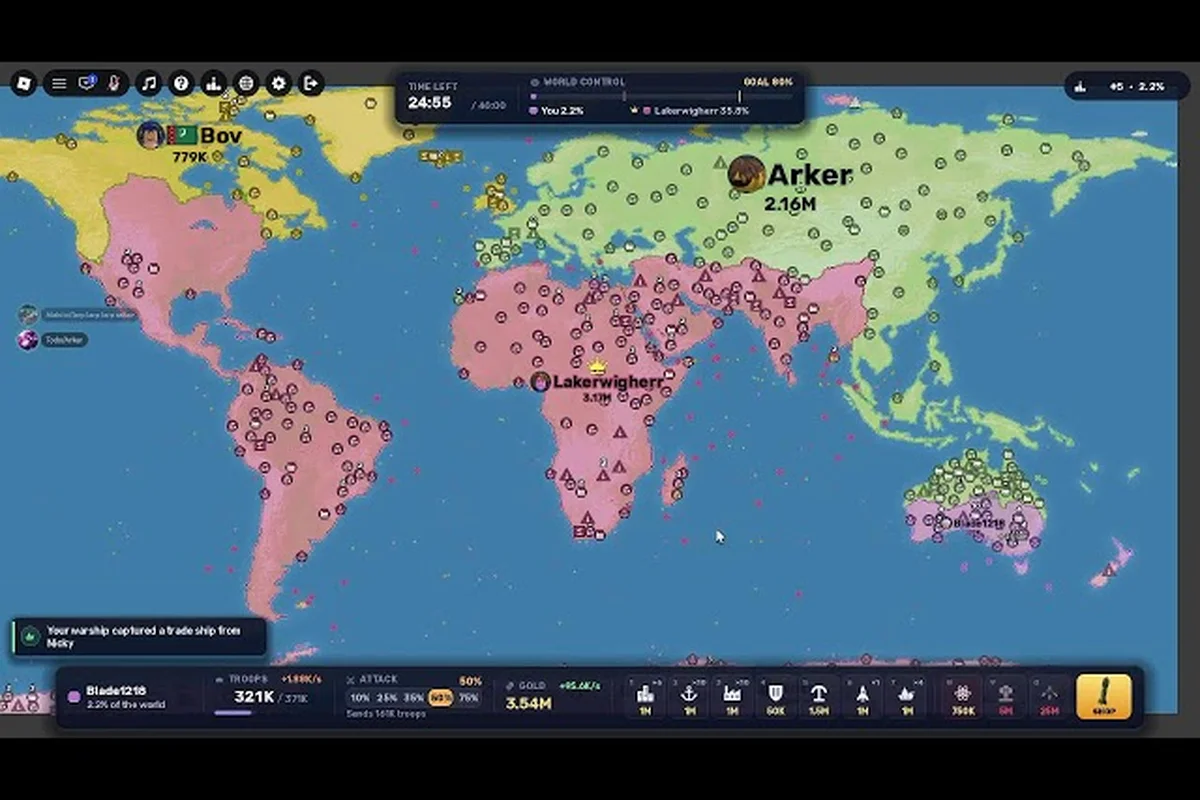
RoWorld World war: Plan Late-Game Global Conquests
Navigate late-game conflict with the roWorld world war guide, comparing solo and team play while coordinating alliances, invasions, and diplomacy.