
Maps
RoWorld maps and spawns: the full world board plus regional, lake, island, Arctic, abstract and Humans vs Nations maps, with spawn strategy.
Introduction
RoWorld's map pool decides how many fronts you can expect, how quickly a match resolves and whether the sea matters. The full world board spreads 88 nations and hundreds of tribes across real geography, with sea crossings and long borders that reward patience and diplomacy. Smaller regional boards compress the same rules into a tighter space, and abstract or mode boards change the geometry without changing the core loop. Community guides list boards such as Strait of Gibraltar, Los Angeles, Montreal, Cape Cod, Clearwater Lakes, Arctic and Sierpinski, along with a Humans versus Nations mode. This page explains what each board type does to your opening, your borders and your endgame so you can pick a map that fits your available time and playstyle.
Map Quick Reference
| Board | Type | Spawn Logic | Best For |
|---|---|---|---|
| World | Full planet | Real country shapes and sea crossings | Learning the complete rules |
| Regional | Team-sized | Compressed borders, faster contact | Shorter matches with friends |
| Lakes & Islands | Water-heavy | Land fragmented by water | Practising naval play |
| Arctic | Small / harsh | Narrow routes, short borders | Fast, aggressive matches |
| Sierpinski | Abstract | Non-geographic geometry | Experienced players wanting variety |
| Humans vs Nations | Mode board | Human and AI nations share the map | Mixed lobbies and practice |
Map Profiles
World
The complete board and the best classroom in the game
Regional
Compressed geography for shorter, denser matches
Lakes & Islands
A board that makes the navy matter
Arctic
Short borders and fast decisions
Sierpinski
Non-geographic geometry for experienced players
Humans vs Nations
A mode board where players and AI share the map
Core Mechanics
A map changes the value of everything else. On the full world board, distance and sea crossings slow contact, which gives you time to build an economy and negotiate before the first real war. On a regional board, neighbors are closer, fronts open sooner and the opening is much less forgiving. Water-heavy boards make ports and transport ships central, while landlocked or narrow boards make a navy almost irrelevant. The map also determines how the 80% threshold feels: on a large board, control accumulates slowly and coalitions have time to form, while on a small board a single strong push can decide the match. Community guides list specific board names, but the categories matter more than the labels, because a new board will usually fit one of these patterns.
Advantages
Choosing the right map is the easiest way to improve your win rate before the match even starts. If you have limited time, a smaller board gives you a complete match instead of an abandoned opening. If you want to learn naval play, a water-heavy board forces you to use ports and escorts instead of treating the sea as a wall. If you are practising diplomacy, a larger board gives you more neighbors to negotiate with and more time before the first war. Understanding spawn logic also helps you evaluate a starting position: a corner with a short border is valuable on any board, while a central position with many edges is a liability unless you have the army to hold it.
Challenges
Map knowledge ages quickly because the pool is community-reported and the game is updated often. Board names may change, new boards may appear, and the balance of an existing board can shift after a patch. Spawn positions are also not fully controllable, so a map that is good in theory may give you a poor start in practice. The biggest limitation is that map advice cannot account for the lobby: an aggressive board is fine when your neighbors are passive and terrible when three experienced players share your border. Treat map choice as a way to set the difficulty and tempo of a match, not as a guarantee of a good game.
Frequently Asked Questions
Which map is best for beginners?+
Do maps change the win condition?+
Why does my spawn matter so much?+
Quick Tips
Before you spawn, decide what kind of match you want. A large board rewards patience and economy, while a small board rewards early aggression and fast decisions. Choosing a board that matches your available time prevents the most common bad experience in RoWorld, which is investing in a long game you cannot finish.
On any map, identify your safe rear first. That is the direction you will not be attacked from, and it is where your economy and your reserve should live. If a board gives you no safe rear at all, treat the first minutes as a defensive problem and prioritise troops over infrastructure until you have established one.
Water is a map feature, not a wall. If your board has sea crossings, assume a neighbor will eventually use them, and keep at least a token defense on the coast. The cost of watching the water is small compared with the cost of losing a rear city to an unopposed landing.
Featured
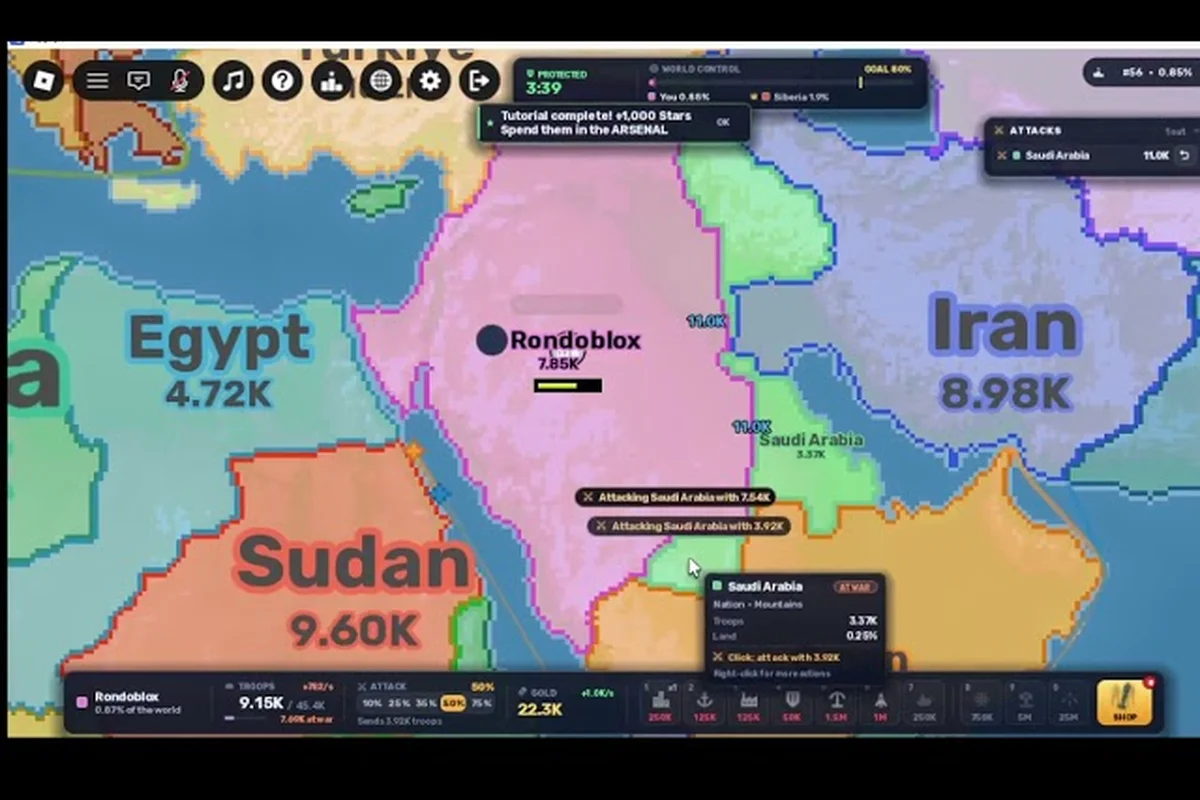
RoWorld Abstract map: Small and Large Map Choices
Compare roWorld abstract map sizes and learn how small-map aggression or large-map expansion changes capital placement, income, and the Humans vs Nations match.
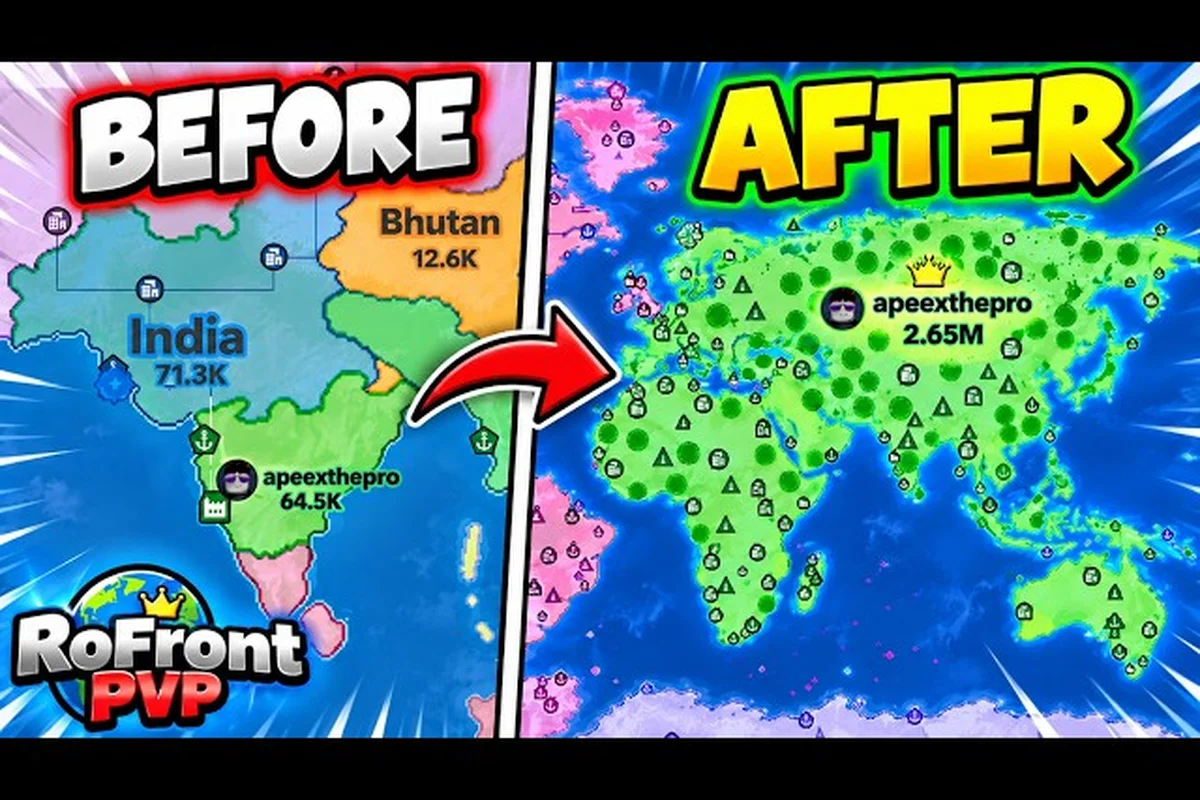
RoWorld Arctic map: Islands, Lakes, and Regional Routes
Navigate the roWorld arctic map across the Sierpinski, island, lake, and regional layouts to choose a strong opening, secure resources, and plan expansion.
RoWorld Map guide: 7 Regions, Capitals, and Routes
Explore the roWorld map guide with seven regions, major capitals, key landmarks, and expansion routes for choosing a safer and more profitable opening.
All Articles
RoWorld Map tactics: Chokepoints, Spawns, and HV N
Master roWorld map tactics for beginners, using chokepoints, safer spawns, capital placement, and HV N mode to gain territory without overextending your nation.
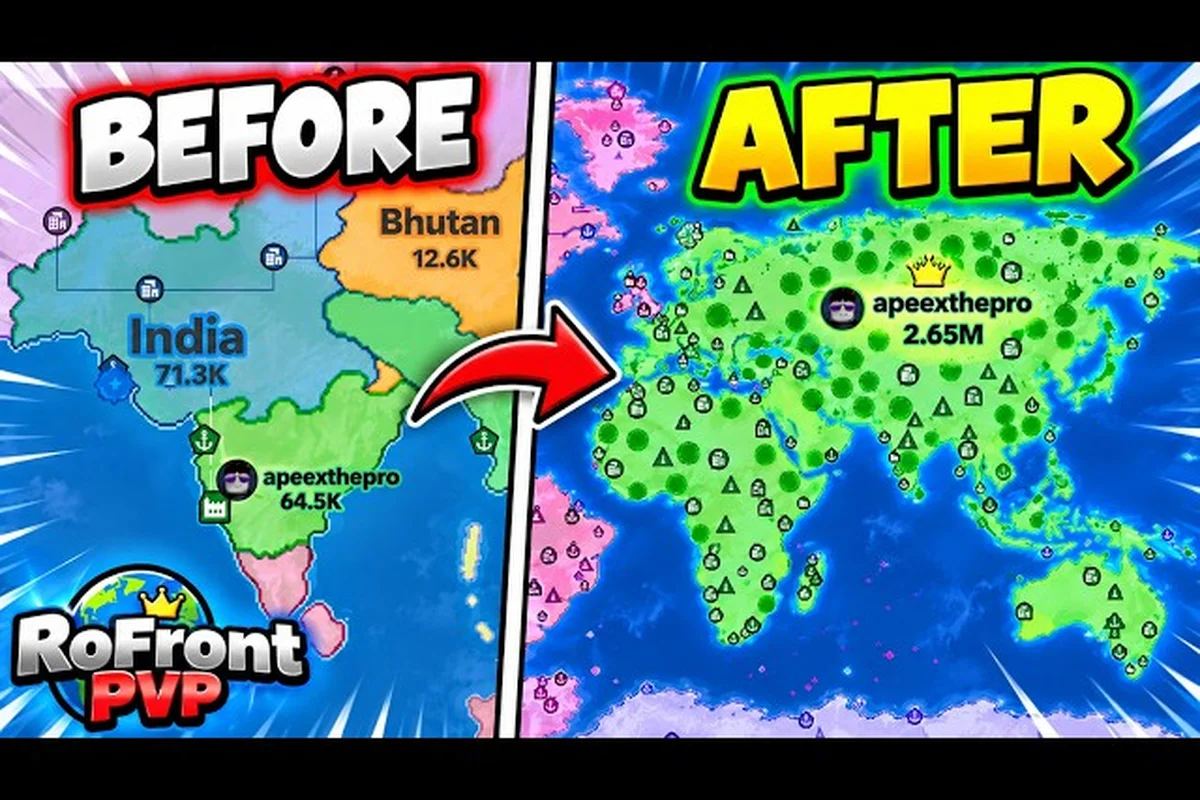
RoWorld Mediterranean map: 5 Landmark Routes
Navigate the roWorld mediterranean map across Gibraltar, Clearwater Lakes, Cape Cod, Los Angeles, and Montreal to compare landmarks and expansion routes.
RoWorld Sea crossings: Routes, Spawns, and Capitals
Find the best roWorld sea crossings by comparing coastal borders, spawn locations, and capital placement for safer expansion and stronger income.
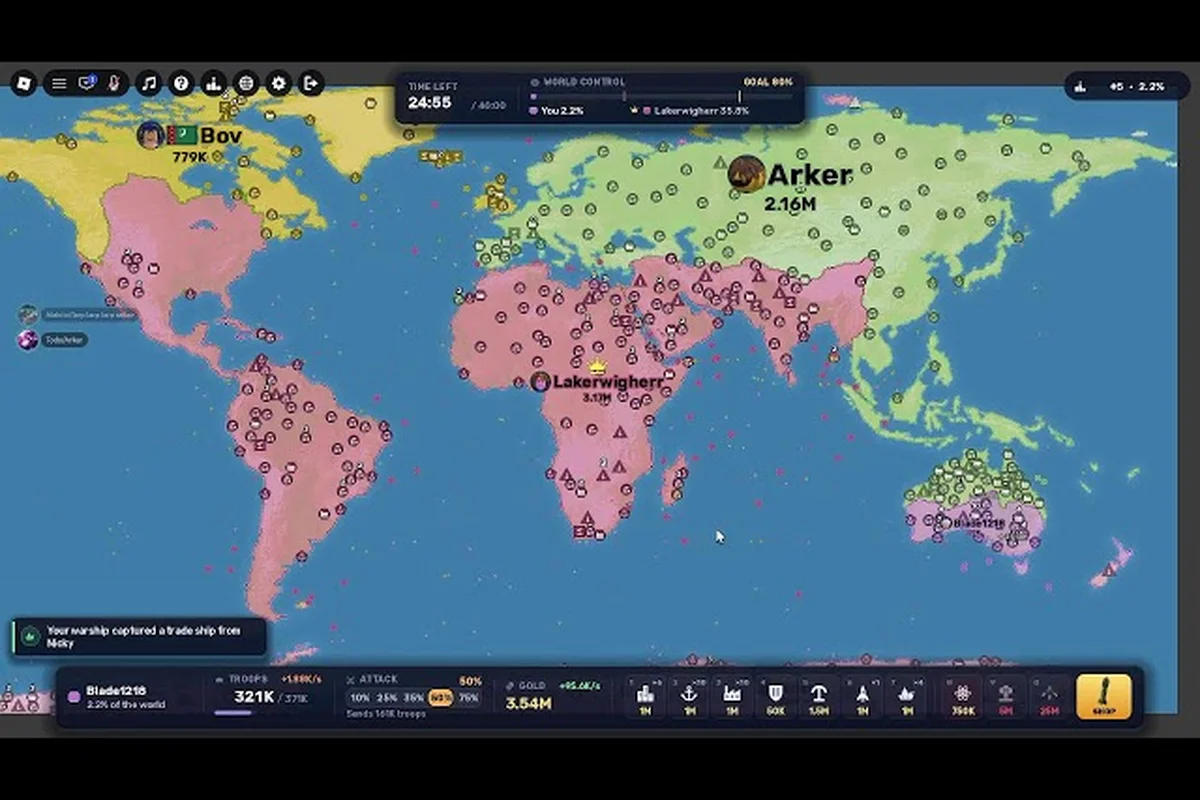
RoWorld World map strategy: Conquer All 7 Regions
Plan across seven regions with the roWorld world map strategy, comparing capital placement, expansion routes, borders, and conquest opportunities.