
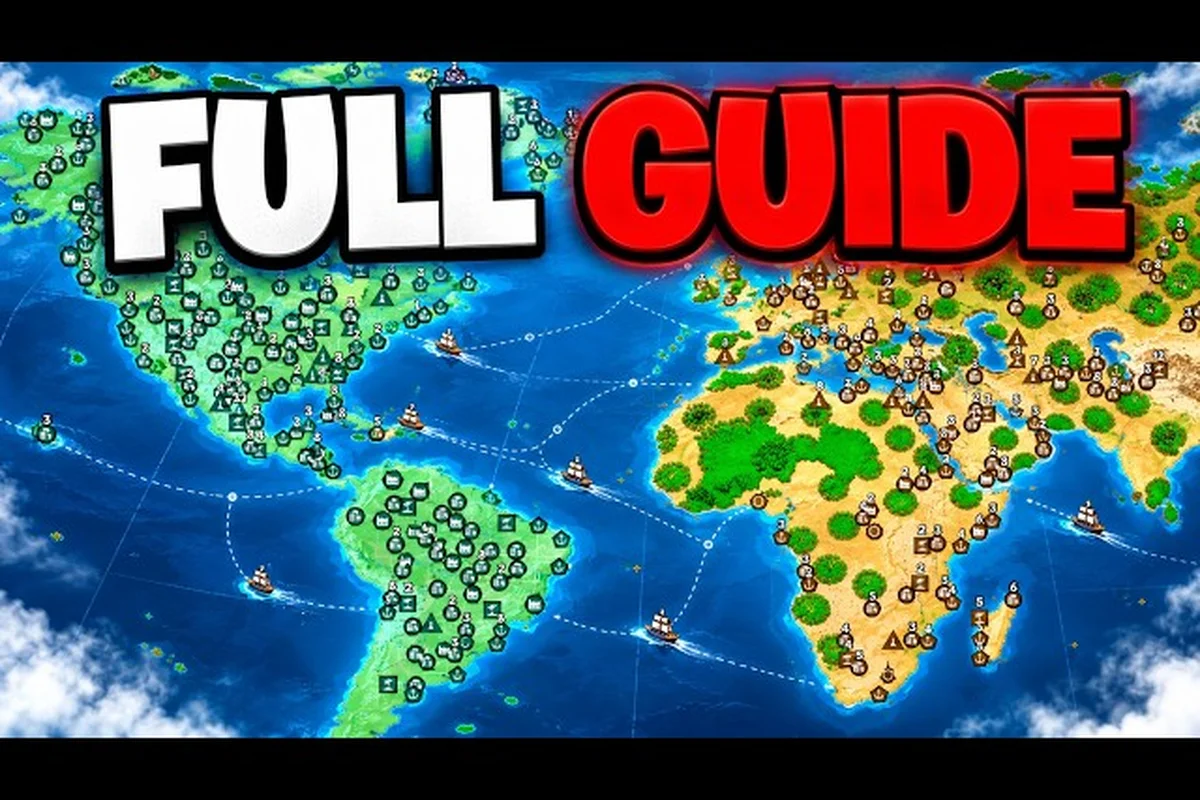
RoWorld how to build should begin with a dependable economy rather than a rushed land grab. Establish resource production first, then balance gold income against troop recruitment so your forces can expand without draining the treasury. Claiming territory is only useful if it supports farms, mines, or trade routes; likewise, a port adds value by reducing transport delays and enabling overseas commerce. A practical opening is to secure one interior resource zone and one coastal logistics point, produce enough food and gold for a first army, and avoid building several disconnected settlements. Before pursuing more territory, use your available troops to defend production, scout potential alliance partners, and negotiate only from a position of financial stability.
RoWorld how to build a strong opening economy
The strongest opening in RoWorld is a compact economy that can support the next decision. Claim nearby land first, secure a useful coastline or trade position, and avoid spreading troops across several distant borders. Community gameplay reports consistently favor a capital-centered expansion, because nearby territory is easier to defend while income continues to grow.
The official RoWorld page on Roblox describes a match for up to 55 players, with 88 player nations and hundreds of tribes sharing the map. It also identifies cities, ports, factories, and alliances as core features. The listed victory condition is control of 80% of the world, which makes early positioning important: every unnecessary border can become another route for an opponent to pressure you.
| Opening priority | Why it matters | Recommended action |
|---|---|---|
| Capital location | Controls nearby expansion and defense | Choose land with room in several directions |
| Income stability | Funds construction and troop production | Improve the economy before starting another war |
| Border security | Limits enemy access | Avoid placing weak nations directly beside strong players |
| Coastal access | Supports port development and trade | Claim a shoreline only when you can defend it |
| Military reserve | Allows a response to sudden attacks | Keep troops available before committing to expansion |
A good first territory is not simply the largest one available. It should have usable expansion space, defensible approaches, and access to resources or coastline without forcing your capital into an exposed corner. If a distant region offers better land, leave it for later. Taking one clean border at a time is generally safer than creating scattered claims that your economy cannot protect.
Build order that supports continuous growth
Start by establishing the capital and its essential supporting structures. Then add income-generating buildings before committing heavily to military infrastructure. The order matters because every new claim or defensive structure competes with the same resource pool, and a nation with weak income may be forced to choose between expansion and survival.
| Phase | Main objective | Best use of resources | Common mistake |
|---|---|---|---|
| Early setup | Create a functional capital | Income and essential city support | Expanding across the map too quickly |
| Consolidation | Stabilize nearby land | Production and border defenses | Starting a second distant war |
| Expansion | Add useful territory | Balanced military and economic growth | Relying on captured land for instant income |
| Consolidation | Protect the enlarged nation | Ports, factories, and border strength | Treating allies as permanent protection |
| Late push | Contest valuable space | Strong reserves and coordinated fronts | Fighting several enemies at once |
The key is to treat buildings as parts of a system. A city provides a foundation, a factory supports production, and a port can improve your connection to trade and maritime movement. Understanding how RoWorld ports, factories, cities, and gold work together can help you judge whether a new structure solves a real bottleneck or merely occupies space.
Avoid an early economy trap
The most common trap is treating visible land as immediate value. Newly occupied territory can look impressive on the map, but it may not yet produce enough to justify its upkeep or require too many troops to defend. A strong opening build spends most of its resources on repeatable income and dependable coverage around the capital.
Players should also avoid spreading construction across several remote cities. Each additional settlement can divide attention, create supply routes that stretch across exposed land, and make it harder to move troops between problem areas. Expand only after the current capital can support another center without losing its defensive margin.
Funding growth: gold before extra cities
Gold is the foundation of the growth loop. The official page confirms that cities, ports, factories, and alliances shape the wider strategy, while the RoWorld creator group on Roblox is the verified community channel. The game does not publish universal building prices, income multipliers, or exact production rates, so responsible advice focuses on economic structure rather than invented numbers.
RoWorld how to get gold is not a single button or isolated trick. It is a matter of keeping production structures supplied, protecting trade routes, and spending gold where it increases future income. A build that repeatedly consumes resources without raising capacity will feel slow, even if the territory looks larger.
Build income before adding expenses
Prioritize structures that create a durable economic loop. Once the capital has enough production, redirect part of the income into reserves rather than immediately unlocking every available option. This gives the player flexibility when a neighbor attacks, a valuable building location becomes available, or an alliance offer creates a new opportunity.
| Gold decision | Best timing | Strategic reason |
|---|---|---|
| Improve core production | During the opening consolidation | Creates a repeatable income base |
| Protect trade access | Before economic pressure builds | Reduces the risk of losing revenue |
| Add a new settlement | After the capital is stable | Prevents expansion from hollowing out defense |
| Fund troop reserves | Before declaring war | Allows a response without abandoning production |
| Support an ally | When both sides benefit | Strengthens security without requiring a border war |
Because exact costs and income rates are not published, do not plan around a fixed number. Instead, observe the available interface at the time of play, compare the choices available at your capital, and choose the option that improves the weakest part of your economy. If port and factory construction are available, evaluate both against your immediate position rather than assuming one is always superior.
Keep the economic center safe
A profitable nation is vulnerable if enemies can enter from several sides. Reduce the number of active threats before expanding into a contested area, and prioritize border protection over distant prestige. The same rule applies to allied territory: a partner may cover one front, but your own core should not depend entirely on someone else’s army.
A useful weekly routine is to review three things: first, map every active front against your capital and allied territory, assigning each threat a defense priority; second, check that key production buildings and transport routes still generate income; and third, estimate whether the gold reserves available can cover the troops required to hold current borders. For example, if two enemy stacks can reach your core in the same travel window, consolidate garrisons or seek alliance support before claiming another port, because each new claim increases the route your armies must protect.
-
Income structure: Confirm that the capital’s production buildings remain active and that no exposed route has been cut.
-
Reserve level: Compare available gold with current military commitments, because a large reserve can deter aggression before combat begins.
-
Expansion value: Ask whether a new claim produces meaningful income, opens a useful route, or only increases the number of borders you must defend.
If the answer to all three checks is weak, consolidate garrisons, reinforce the capital’s production buildings, and secure transport routes before pushing into another port or contested border. For example, if claiming a port would require defending a second route while current reserves cannot fund the troops needed to hold it, delay expansion and preserve the income base; the additional claim may look valuable but can create a larger defense burden. For a broader explanation of how income choices affect the late game, see how the RoWorld economy snowballs.
RoWorld how to get troops without stretching defense
Troops should answer a clear purpose. Building an army because an enemy appears, then discovering that another player attacks from the opposite side, creates a two-front crisis. RoWorld how to get troops therefore depends on production capacity, safe staging, and disciplined commitment to one front at a time.
The official listing identifies nuclear weapons among the game’s features, but it does not publish troop production rates, attack percentages, or unit multipliers. Those values may also differ from the upstream OpenFront.io adaptation, so the safest approach is to rely on what the current RoWorld interface shows. Do not import numbers from another version and present them as RoWorld rules.
Match production to a real operation
Define the objective before adding soldiers. A border defense, a controlled raid, and a large territorial push each require different levels of commitment. Build enough strength for the chosen operation, retain a response force, and avoid spreading the same army between distant targets.
| Troop objective | Main requirement | Preparation focus |
|---|---|---|
| Border deterrence | Visible strength near threatened approaches | Defense coverage and reserve troops |
| Limited attack | A concentrated force at one frontier | Production and forward positioning |
| Territory capture | Enough troops to hold gains afterward | Secure routes and nearby support |
| Multi-front defense | Coverage across several approaches | Shared fronts or carefully timed reinforcement |
| Alliance support | A force that can arrive before the front collapses | Clear timing and coordination |
Factories support the wider production system, but their value depends on safe access and enough economic backing. If a factory or capital can be pressured easily, reinforce the route leading to it rather than sending every available troop toward a distant opportunity. A narrow but secure production chain is more valuable than a broad army that cannot receive reinforcement.
Why a reserve beats a full commit
Community gameplay reports repeatedly emphasize keeping a reserve before the first major war. The exact percentage is not published, so treat this as a strategic principle rather than a formula. A reserve lets you respond to an attack, reinforce an ally, or exploit a temporary opening without abandoning another section of your borders.
After each major operation, rebuild the reserve before beginning another conflict. This may delay expansion, but it prevents a chain reaction in which one defeat weakens the economy, fewer troops become available, and the next loss becomes more damaging. A one-front approach is less dramatic than fighting everywhere, yet it gives you a clearer order of priorities.
For practical building and defense choices, the guide to constructing a RoWorld city and factory can help you connect military preparation with infrastructure. For example, pair a factory upgrade with a defensive resource buffer, so production does not leave your city exposed while you gather gold for the next troop wave. A port can shorten troop movement, but only after checking the route and reserve capacity; otherwise faster deployment may still fail if the destination lacks enough capacity or supporting infrastructure.
Ports: coastal access and its defensive cost
A port can serve as both an economic asset and a strategic objective, but its usefulness depends on location, defense, and access to your wider network. RoWorld how to build a port should therefore begin with a map assessment. Do not place it merely because water is nearby; consider whether it creates a secure trade connection, improves your capital’s reach, or becomes a bridge between important regions.
The official page confirms that ports are part of RoWorld, although it does not publish universal port costs, trade bonuses, or construction times. Those details can vary in the live interface, and no verified official table was available at the time of this guide. Build from the current game menu rather than assuming a fixed sequence.
Choose between capital access and outward reach
There are two broad port strategies. A capital-connected port strengthens the existing economic core, while an outward-reaching port can serve as a new hub near valuable but dangerous territory. The first is generally safer; the second may offer greater strategic value if you can secure the route.
| Port approach | Main advantage | Main risk | Best use |
|---|---|---|---|
| Near the capital | Easier supervision and defense | May offer limited new reach | Consolidating the early economy |
| Along a secure trade route | Improves connection between settlements | Route can be attacked | Supporting stable multi-city growth |
| Near a contested frontier | Expands military reach | Requires constant protection | Preparing for a focused push |
| Beyond current territory | Creates a forward hub | Supply line becomes vulnerable | Deliberate late-game expansion |
| Beside another nation’s border | Can pressure opponents quickly | May trigger retaliation | Only when diplomacy has failed |
Compare the port’s placement with your building limits and the number of settlements you can support. A distant port is not automatically efficient if it creates a fragile route through enemy territory. The more exposed the connection, the more defensive attention it needs and the fewer other fronts you should be fighting.
Build ports only after a secure link
The best port is one your army can reach quickly and your economy can supply. Place it within a defensible corridor, watch nearby nations, and expand any necessary land around it before the structure becomes an isolated prize. Coastal control without secure inland access can make the port easier for an opponent to pressure or bypass.
If you want to understand the space and structure implications, review how RoWorld cities, ports, and factories fit together. The important principle is straightforward: a port is valuable when it is connected, defendable, and useful to the rest of your build—not simply because it occupies a coastal tile.
RoWorld how to form an alliance without giving up control
An alliance can protect a border, deter aggression, and create opportunities for coordinated expansion. It can also become dangerous when players assume shared interests remain identical. RoWorld how to form an alliance should therefore begin with shared needs, clear responsibilities, and a reason to cooperate that benefits both sides.
The official game page lists alliances as a core feature, and the game supports peaceful relations, but exact trust, betrayal, or penalty values are not published in the materials available for this guide. Any community discussion of alliance consequences should therefore be treated as player experience, not a fixed rule.
Match allies by geography and goals
The strongest partnerships often begin with complementary positions. A coastal nation and an inland nation may protect different approaches, while two neighboring powers can cover one another’s exposed border. Avoid approaching a potential ally solely because they appear strong; a large player may also be the most attractive target for everyone else.
| Alliance situation | Potential benefit | Risk to manage | Practical safeguard |
|---|---|---|---|
| Neighboring nations | Shared border security | Pressure to share expansion | Define responsibilities in messages |
| Coastal and inland partners | Complementary routes and coverage | Conflicting trade priorities | Agree on the main shared objective |
| Smaller nation and a large power | Access to stronger defense | Unequal bargaining position | Avoid one-sided commitments |
| Two active expansionists | Joint pressure on a third player | Competing claims | Divide objectives carefully |
| Existing opponents | Temporary peace | Renewed conflict later | Use only for a specific shared need |
Before sending a request, explain what you can offer. A useful message identifies the border in question, the threat being addressed, and the action you are prepared to take. Vague invitations create little value; a specific proposal gives the other player a reason to accept.
Keep communication and commitments active
An alliance works best when both sides know what happens when one player is attacked, when a third party enters the territory, or when a shared operation goes wrong. These conversations do not guarantee perfect coordination, but they reduce misunderstandings. More detailed diplomatic options are covered in the RoWorld alliance and diplomacy guide.
Do not build a strategy that assumes your ally will handle every front. Cover the approaches closest to your capital, avoid placing your only economic center beside an untested partner, and maintain enough military flexibility to respond if the regional balance changes. Cooperation should lower pressure, not remove your need for self-sufficiency.
A fast-growth setup from opening to first push
A reliable RoWorld how to build strategy follows a repeatable sequence: secure nearby land, create a stable income base, strengthen the capital, and add one useful piece of infrastructure at a time. The goal is not to unlock the largest number of buildings. It is to make every new structure support the next stage of growth.
Use this sequence as your practical checklist: first secure a capital with defensible approaches, then claim nearby territory, improve core production, and preserve a military reserve before expanding. For example, if a port is your next target, confirm that its route and surrounding land are safe before spending resources on construction; similarly, delay factories until production can support both construction and troop upkeep. This order prevents a larger map from creating unstable infrastructure, while every completed building strengthens income, defense, or the next expansion step.
- Choose a capital with room to expand and several defensible approaches.
- Claim nearby territory before attempting a distant objective.
- Improve core production until income consistently supports new construction.
- Keep a military reserve before engaging in a major border fight.
- Add a port only when its route and surrounding territory are secure.
- Build factories when production support improves your overall economy.
- Form an alliance around a specific need rather than a vague promise.
- Defend one front carefully before opening another conflict.
| Growth stage | Build focus | Military posture | Next decision |
|---|---|---|---|
| Opening | Capital and nearby land | Minimal, defensive readiness | Consolidate income |
| Consolidation | Core production | Hold borders and preserve reserve | Add a city or port |
| Expansion | Useful adjacent territory | Concentrated on one front | Secure captured land |
| Cooperation | Alliance or shared objective | Avoid divided commitments | Repair and rebuild reserves |
| Advanced push | Multiple specialized structures | Strongest on the selected front | Convert control into lasting advantage |
Watch the map continuously because neighboring nations may change their build priorities. If a strong player approaches your border, improve your weakest defensive area instead of racing toward an unrelated landmark. If diplomacy succeeds, consolidate trade and military coverage instead of assuming the alliance can carry the build.
Finally, judge success by resilience rather than map size alone. A smaller nation with steady income, protected production, a defensible port, and a useful alliance can expand more effectively than a large nation that cannot support its borders. Build one advantage at a time, keep enough resources for uncertainty, and choose the next project only when it strengthens the overall network.
Frequently Asked Questions
What is the best early build for a new RoWorld nation?
A strong early build prioritizes a safe capital, nearby territory, core income, and border protection. Add a port or a second city only when the capital can support it without weakening defense. Keep a troop reserve before committing to a war, since a stable economy is easier to maintain than an oversized but poorly protected claim.
How can I earn more gold in RoWorld?
Focus on production structures that strengthen the capital’s repeatable income, protect their supply routes, and avoid unnecessary buildings that drain resources without improving capacity. Exact prices and income rates are not published, so use the current in-game values. The best upgrade is usually the one that removes your economy’s clearest bottleneck.
Should I build a port before expanding to another city?
Not always. A port is most useful when it has a secure connection to your capital, a defensible surrounding area, and a clear economic or strategic role. If you still have an exposed capital and unstable production, another city may offer better value. Build the port when it supports a network you can protect.
When is the right time to form an alliance?
Form an alliance when both nations have a specific shared interest, such as protecting a border or countering a common threat. Identify the problem, explain what you can contribute, and avoid making the entire strategy dependent on the partner. An alliance should reduce pressure while both sides retain enough strength to handle another front.
How many troops should I keep in reserve?
The game does not publish a universal reserve percentage, so there is no official fixed number to copy. Keep enough strength to respond to an unexpected attack or protect a key structure while another force is committed. Reassess after each operation, and avoid beginning a second major war until income and reserves can support it.