
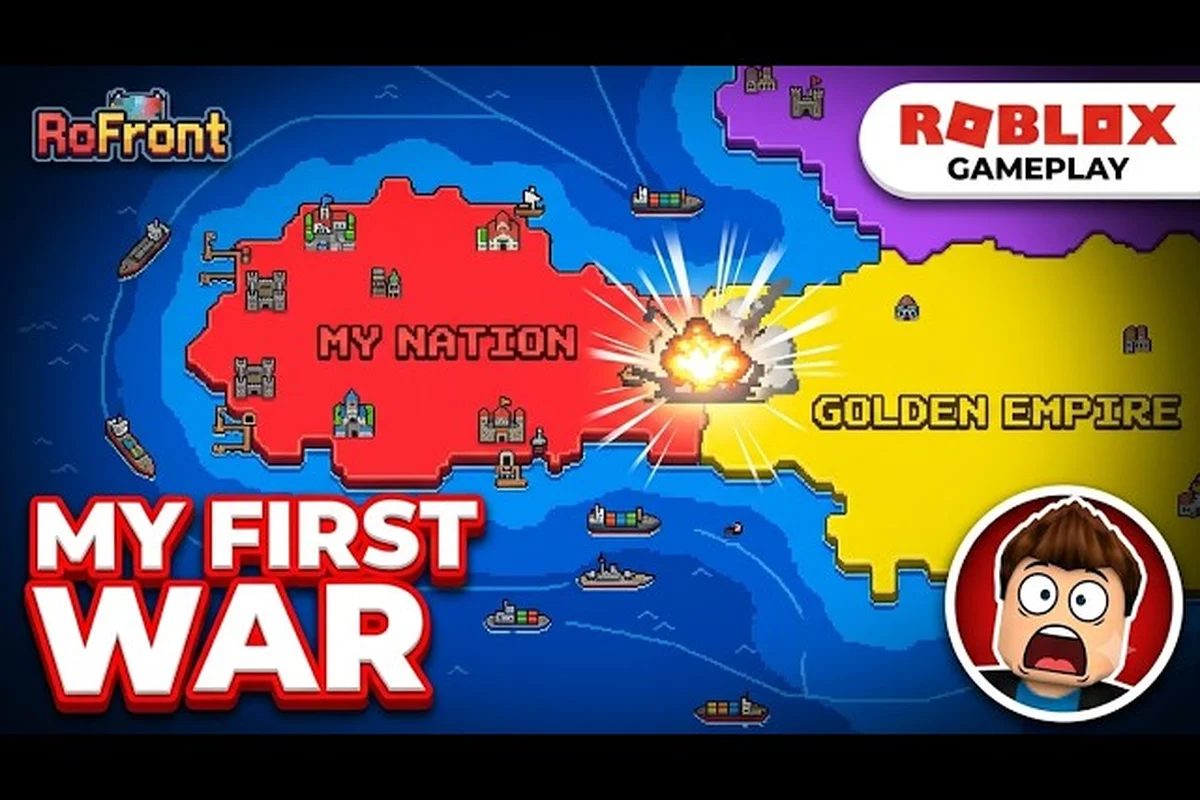
Infrastructure determines how efficiently a nation can earn, expand, and survive in RoWorld, so building value must be evaluated across the full territorial loop rather than by cost alone. This roWorld infrastructure guide compares roWorld economy buildings, military buildings, and defensive buildings by their practical contribution: resource generation supports construction, military construction protects expansion routes, and defensive buildings reduce the operational cost of holding territory. A strong example is to secure an economy upgrade before adding a major military complex, then reinvest the resulting income into layered protection, avoiding a defense-heavy build that leaves too little capital for long-term growth.
What Makes a Strong RoWorld Infrastructure Foundation?
A useful RoWorld infrastructure foundation connects income, land control, and combat readiness rather than treating every structure as an isolated purchase. The official RoWorld game page identifies cities, ports, factories, alliances, and nuclear weapons among the game’s features, while also stating that a match can include 88 player nations and hundreds of tribes. With that many potential neighbors, a dependable network is more valuable than an impressive but vulnerable cluster.
The official listing also establishes the 80% world-control objective, up to 55 players per server, and 51.0 million visits as of October 2026. Those figures demonstrate the game’s scale, but they do not publish building prices, income rates, troop multipliers, attack bonuses, or maintenance values. As a result, this guide evaluates infrastructure through confirmed functions, placement, sequencing, and strategic relationships instead of inventing precise statistics.
| Infrastructure layer | Main purpose | Best operating condition | Common mistake |
|---|---|---|---|
| Economic core | Produce recurring resources | Stable, protected interior territory | Spreading income structures across exposed land |
| Military network | Support attacks and territorial defense | Multiple connected staging regions | Concentrating every weapon near one border |
| Defensive ring | Slow or discourage hostile advances | Strong terrain and clear sight lines | Overbuilding the same exposed approach |
| Transport network | Link ports, cities, and production | Coastal access with protected routes | Building around convenience rather than security |
The central principle is mutual reinforcement. A city needs protection, a port needs a secure route to productive territory, and a military outpost needs a dependable economic base. This approach makes the roWorld building strategy more resilient when a border shifts, a neighboring nation grows stronger, or an alliance changes.
Separate Founding, Expansion, and Consolidation Phases
Your infrastructure should evolve through distinct phases. A compact foundation creates stability; expansion structures increase reach; consolidation structures turn captured or controlled space into a durable network. Building everything immediately may appear efficient, but it can leave critical gaps in income, defense, or mobility.
| Phase | Primary objective | Infrastructure emphasis | Decision question |
|---|---|---|---|
| Founding | Survive and establish a viable base | Core income, capital support, basic coverage | Can this network support its next expansion? |
| Expansion | Reach useful land and connect regions | Cities, coastal access, forward support | Does new territory improve income and protection? |
| Consolidation | Stabilize borders and reduce pressure | Redundant defense, protected production, logistical links | Can one front fail without weakening the whole? |
| Competition | Contest major players and exploit openings | Flexible military capacity, multiple options | Which target offers value without exposing the core? |
This phase model turns the roWorld infrastructure guide from a simple construction list into a decision system: every purchase should answer the next strategic question rather than fill an empty visual slot. For example, add core income and capital support during Founding, coastal access and forward support during Expansion, then redundant defense and logistical links during Consolidation. In Competition, prioritize flexible military capacity over permanent infrastructure that cannot be redeployed. This sequencing improves roWorld building value because each new structure increases the usefulness of the previous phase without creating an expensive defense, economy, or mobility gap.
How to Balance RoWorld Economy Buildings
RoWorld economy buildings provide the resources that support construction, research, alliances, and military operations. Their exact costs and income rates are not published on the official page, so players should treat their relative value through functional coverage rather than unsupported gold calculations. A sound economy begins with dependable production, then adds reach and redundancy without sacrificing the security of the core.
The RoWorld building guide provides focused coverage of cities, ports, and factories. Within this broader infrastructure approach, those structures should work as linked parts of one system. A city is most useful when it controls valuable interior space; a port becomes strategically meaningful when it connects production to a defensible coast; a factory serves a broader role when your network needs additional military capacity.
Match Economic Buildings to Territory
Building placement should reflect what each structure can actually support. A coastal port cannot function as an isolated centerpiece if the route behind it is insecure, while an inland city has less direct logistical relevance than a settlement covering several connected land routes. Consider the entire route before treating any one building as a finished solution.
| Territory pattern | Better economic focus | Placement logic | Risk to manage |
|---|---|---|---|
| Coastal holding | Port-led network | Connect the port to protected inland production | Blocked harbors and exposed supply routes |
| Compact inland core | City-centered network | Place expansion around strong interior links | Overcrowded borders and weak forward support |
| Long territorial corridor | Distributed city network | Cover the corridor instead of concentrating at one end | Gaps between separated regions |
| Scattered footholds | Redundant economic nodes | Give each cluster its own support structure | Resources split too thin across distant areas |
For roWorld economy buildings, the key metric is not simply the number of structures. It is useful reach per vulnerable link. A larger network can be weaker if every route passes through one exposed settlement. Players who spread production without securing connecting territory often gain land faster than they gain stable value.
Protect Income Before Expanding It
Income structures are valuable only while they remain operational. Place essential production within the interior when possible, then use forward positions to cover approaches rather than to hold every border tile. This preserves a safe economic core and creates a mobile defense margin around it.
A practical test is to imagine the loss of your most exposed settlement. If removing it would leave the core without income, military funding, or access to allies, the network needs redundancy. If the loss creates a manageable gap that your remaining structure can cover, you may already have a reasonable balance. This approach is more informative than a generic “more buildings” rule.
Gold generation deserves separate attention because the economy is only one part of the infrastructure. The roWorld gold guide can help you connect resource production to broader financial priorities, while your infrastructure decisions should still focus on securing that income rather than chasing every possible revenue source.
RoWorld Military Buildings and Network Design
RoWorld military buildings turn territorial access into combat pressure, but their effectiveness depends on support, timing, and geography. The official game page confirms factories and nuclear weapons as features, yet it does not provide weapon values or attack percentages. This roWorld infrastructure guide therefore avoids assigning unsupported damage figures and focuses on what community observation can safely tell us about construction priorities.
Community reports indicate that defense posts, missile silos, and SAM launchers exist, although their precise values are not published. Treat them as community-reported structures and verify their current behavior in-game. The same caution applies to build order: community footage can reveal a useful sequence, but it cannot substitute for a current official balance sheet.
Build Redundancy, Not Duplicate Coverage
A strong military network can absorb pressure from more than one direction. Stacking every offensive or defensive structure around one border creates a dramatic fortress, but it may leave the rest of the nation exposed. The better principle is distributed deterrence: several capable regions that can support one another without every structure sharing the same weakness.
| Network approach | Strength | Weakness | Suitable when |
|---|---|---|---|
| Single fortress cluster | Concentrated striking power | One vulnerable corridor dominates the layout | Temporary pressure is focused on one front |
| Distributed military ring | Multiple threats and fallback positions | More coordination is required | Borders touch several active nations |
| Interior reserve | Forces can reinforce threatened regions | Forward response may be slower | A large, stable core supports expansion |
| Balanced forward-and-reserve mix | Pressure and recovery share capacity | Requires deliberate land control | Long-term competition is the goal |
For roWorld military buildings, support structure matters as much as the military structure itself. A forward position without a dependable production base can become isolated. A large reserve without forward coverage may permit the enemy to dictate every engagement. The roWorld SAM launcher overview fits into this wider system as one reported tool for territorial defense rather than a universal first purchase.
Coordinate Factories, Ports, and Territory
Factories and ports should support the same campaign plan. A factory positioned away from forward territory may still contribute, but a port or coastal route with no meaningful connection to that factory can waste infrastructure value. The goal is operational coherence: every major structure should influence where you can produce, move, defend, or expand.
A sound military-network sequence begins with a threat model: identify the likely enemy axis, then place military buildings to cover the terrain that channels troops into a narrow defensive line. For example, a factory near the coast can anchor forward coverage only when a port or protected route lets it receive reinforcements; otherwise, its defensive buildings may protect the wrong side of the map. This makes roWorld building value depend on connection and timing, not on the number of military structures purchased. A well-positioned defensive building can deter an advance before a raid reaches production, while a remote one may spend resources without changing the front.
-
Identify the border most likely to become active.
-
Establish an interior economy that can sustain construction without constant interruption.
-
Connect the coast, production area, and forward territory through protected routes.
-
Add forward coverage where the enemy must pass, not across every available tile.
-
Preserve an interior reserve that can respond when another front opens.
This approach makes the roWorld building strategy adaptable. Instead of reacting with a purchase after every attack, decide which territory must remain stable, where deterrence is most efficient, and how your core can reinforce the exposed edge. For example, a coastal factory with a connected port can project defensive coverage along a predictable landing route, while an isolated production area may be better protected by preserving factories and economy buildings as an interior reserve. In practice, the highest roWorld building value comes from placing military buildings at chokepoints, keeping protected routes open, and adding defensive structures before enemy raids can reach the factory network. This creates a staged roWorld military strategy: deter the first advance, reinforce the active border, and maintain enough production capacity to fund the next defense without abandoning the economy.
Positioning RoWorld Defensive Buildings
RoWorld defensive buildings are strongest when they exploit terrain, delay attackers, and protect routes that lead to valuable infrastructure. Exact damage, range, and construction values remain unpublished, so placement should be judged by strategic geometry. A defensive structure that protects an economy route is more valuable than one standing alone behind a large group of similarly priced buildings.
Use Layered Defense
The most reliable defensive layout uses layers. The first layer creates friction, the second supports the main fighting position, and the third protects the settlement or production complex behind it. Together, these positions create defensive depth, which gives defenders multiple chances to respond while attackers lose room to maneuver.
| Defensive layer | Position | Main task | Why it matters |
|---|---|---|---|
| Warning line | Near the likely approach | Reveal and discourage early moves | Gives the core time to prepare |
| Fighting position | At a natural chokepoint or strong approach | Delay and contest the attack | Makes attackers spend more effort to advance |
| Protected core | Around income and military production | Preserve essential operations | Prevents one breakthrough from disabling the network |
| Reserve position | Deeper inland | Reinforce whichever front weakens | Adds flexibility without duplicating every border |
Terrain can make a modest defense more effective. Coastlines, narrow land corridors, hills, chokepoints, and awkward borders can all shape an engagement, although exact terrain benefits are not published as fixed percentages. Use visible land access and community experience to identify likely approaches, not just the nearest enemy border.
Avoid a Ring That Is Too Thin
Many defensive mistakes come from equal attention to every direction. If your territory has several approaches, spreading structures evenly may leave each position too weak. Concentrate first on the route with the greatest value behind it, then create support for the second most dangerous approach. This does not mean ignoring all other borders; it means selecting priorities based on consequences.
The RoWorld building placement guide is especially useful when you need to compare front-line positions with safer interior sites. For the infrastructure system, the practical test is simple: if a position is lost, does the next layer still protect the economy and military network? If not, the network needs another layer before it needs more structures.
Turning RoWorld Building Value into Territorial Control
RoWorld building value comes from the relationship between a structure and the land around it. A city does not become valuable simply because it exists; it becomes valuable when it supports controlled territory. A port needs connected coastal operations, and a military structure needs a viable route to a contested area. This is why functional value is a better decision rule than a raw construction list.
The official game page lists 88 player nations, hundreds of tribes, alliances, and the 80% control objective, creating a highly competitive strategic environment. In that setting, infrastructure should help you capture and retain territory rather than merely occupy it. Every additional settlement or weapon changes how opponents can approach, negotiate, or attack.
Evaluate Projects by Strategic Function
Before building, identify the weakest link in the current system. If income is unstable, expand the economic core. If attacks repeatedly succeed because your borders are thin, add defense. If captured territory cannot be supplied, improve connections. If you can expand but cannot hold the result, create redundancy and reserve capacity.
| Current problem | Best infrastructure response | Secondary benefit | What not to do |
|---|---|---|---|
| Irregular income | Add or secure economic capacity | Supports construction and alliances | Expose the core to pursue marginal income |
| Repeated border incursions | Strengthen the threatened approach | Protects nearby production | Spread defenses evenly without prioritizing impact |
| Disconnected territory | Build links through cities, ports, and routes | Improves control across the map | Claim distant land without a supply structure |
| Strong defense but weak offense | Add military production or staging | Creates pressure beyond the shell | Keep building only defensive positions |
| Strong army but shrinking economy | Stabilize production and secure routes | Funds future campaigns | Expand with an unreliable resource base |
Before approving a roWorld infrastructure project, ask three strategic questions: which specific weakness it addresses, which territory or economic network it strengthens, and which existing structure it connects to or depends on. For example, a new route is premature if it lacks a secure city or port at either end, while a defensive building should cover a repeatedly threatened border rather than duplicate protection elsewhere. If the answer to any question remains unclear, delay construction and reinforce the system’s current limiting link first.
Use a Sequential Build Plan
A sequential build plan limits expensive mistakes by testing each infrastructure stage before committing to the next. First secure the starting core with viable capital and production, then choose a city, port, or factory specialization suited to the terrain; connecting valuable territory before adding military capacity keeps captured regions manageable, while deterrence buildings and reserve forces prevent one front from forcing a defensive response. Only after these foundations function reliably should you deepen defensive buildings or expand into a new cluster, because overextension can leave the economy unable to support the front line.
| Build sequence | Infrastructure action | Strategic reason |
|---|---|---|
| Secure the starting core | Confirm capital and nearby production are viable | Creates a dependable base |
| Choose an economic identity | Develop a city, port, or factory plan suited to the location | Aligns construction with terrain |
| Connect valuable land | Build routes between useful regions | Makes captured space manageable |
| Establish deterrence | Cover the most consequential approaches | Reduces the cost of defending everything |
| Create military flexibility | Support attacks and retain reserves | Prevents one front from dictating strategy |
| Expand in stages | Add another cluster only after the first works | Limits overextension |
This sequence also supports a stronger roWorld building strategy when alliances shift. Stable capital, production, and connected infrastructure let you negotiate from strength, time an attack, and preserve reserve resources instead of diverting every unit to one emergency. For example, if a factory and port cluster remain online while another front demands attention, you can reinforce the threatened route or redirect output without abandoning the economic core. Deterrence buildings then reduce the need for an immediate military response, giving the economy room to recover after a failed expansion.
A Complete RoWorld Building Strategy by Situation
There is no single perfect infrastructure layout because every nation begins with different terrain, neighbors, and early decisions. The useful strategy depends on whether you are stabilizing a compact core, controlling a coast, pushing outward, or defending a wide empire. The following framework adjusts priorities without pretending that RoWorld publishes fixed building values.
Early Game: Stability Before Scale
Early infrastructure should be narrow and dependable. Protect the capital area, support your first reliable income source, and avoid spending everything on distant claims. A compact arrangement is easier to understand and repair when a neighboring player attacks. At this stage, optional breadth matters less than the confidence that your core can function after losing one exposed position.
Community gameplay observations often describe a loop of placing a capital, expanding into available land, encountering neighbors, developing an economy, and then fighting or negotiating. Treat that sequence as player experience rather than an official rule. The practical implication is sound: establish a base before treating the surrounding map as fully controllable.
Mid Game: Connect and Deny
Once the core is stable, prioritize links between production, coast, and forward territory. Add enough military and defensive infrastructure to discourage opportunistic attacks while preserving space for expansion. This is the point where the roWorld military buildings and roWorld defensive buildings should begin reinforcing each other rather than serving as separate upgrades.
Focus on threat denial around high-value land. A position that prevents an enemy from reaching a nearby city may be more useful than a distant position that looks impressive on the map. Use the landscape to identify approaches, then build depth behind the most consequential route.
Late Game: Preserve Flexibility
A large territory creates more opportunities but also more obligations. Your network should be able to lose one front without collapsing. Keep economic production distributed enough to avoid a single-point failure, maintain several ways to reinforce threatened land, and avoid building every military asset in one area.
Late-game players should also watch for opponent adaptation. A port may lose relevance when a route is blocked; a defensive line may become obsolete when an opponent changes approach. The best infrastructure plan leaves room for relocation and replacement. For broader competitive decisions, the roWorld strategy guide can help connect infrastructure priorities with expansion, diplomacy, and attacks.
Practical RoWorld Infrastructure Checklist
A balanced setup is not created by memorizing a universal structure list; it comes from reviewing the network whenever territory, neighbors, or priorities change. Compare roWorld economy buildings for production and trade value against roWorld military buildings for territorial control, then check whether roWorld defensive buildings cover exposed borders or important resource nodes. For example, adding a wall or defensive building may strengthen a corridor but reduce space for an economy building, so the checklist should evaluate coverage, access, and expansion capacity together without assuming unpublished costs or stats.
Review the Core
-
Confirm that the capital and nearby production form a protected center.
-
Check whether one lost settlement would disable essential income or construction.
-
Identify routes where enemy access leads directly to valuable infrastructure.
-
Make sure forward positions have support from the interior.
Review Expansion
-
Verify that every remote claim has a reason to exist.
-
Connect new territory to production or transport instead of leaving it isolated.
-
Avoid expanding faster than the network can defend.
-
Keep a reserve plan for newly exposed borders.
Review Defense and Military Capacity
-
Give likely approaches more priority than every possible direction.
-
Layer warning, fighting, and protected-core positions where terrain allows.
-
Preserve military capacity away from the most exposed border.
-
Test whether one destroyed position can be supported by the rest.
Review Long-Term Value
-
Replace structures whose original purpose no longer fits the strategy.
-
Balance economy, military, and defensive investment across the entire territory.
-
Treat community-reported buildings as unconfirmed until checked in the current game.
-
Reassess the plan before alliances, borders, or major campaigns change.
The key takeaway is simple: build for protected connections, layered defense, and strategic flexibility. A strong roWorld infrastructure guide should help you earn resources, use them efficiently, and preserve the territorial control that the official 80% victory objective rewards. Cities, ports, factories, and community-reported defenses all have roles, but their value comes from how those roles reinforce one another.
Frequently Asked Questions
What is the best building strategy in RoWorld?
The best building strategy connects a protected economic core, useful transport or production links, and layered defense around valuable routes. Start with a manageable foundation, expand toward territory that supports income and military goals, and preserve reserves so one attack does not disable the entire network.
Should RoWorld players build more cities, ports, or factories?
Choose the structure that matches the territory and the current strategic need. Cities support inland development, ports connect coastal operations, and factories support military capacity. Because exact costs and output values are not published, prioritize functional coverage, safe routes, and meaningful connections over raw structure count.
Where should defensive buildings be placed?
Place defensive buildings around the approaches that lead to the most valuable income and military areas. Use terrain to create friction, layer fighting positions behind a warning line, and protect the interior production core. A smaller defense with dependable fallback positions can be more reliable than equal coverage on every border.
How does building value affect territorial control in RoWorld?
Building value comes from the function a structure performs and the territory it supports. A city strengthens connected land, a port depends on secure coastal routes, and a military structure matters when it can protect or contest relevant territory. Consider reach, vulnerability, and strategic purpose before adding another project.
Is a large RoWorld economy always better than a compact one?
No. A large economy can fund expansion, but it may also spread resources across distant, vulnerable regions. A compact economy is easier to secure and can be more reliable when border pressure is high. Expand when your network can protect, connect, and replace the structures supporting that growth.