
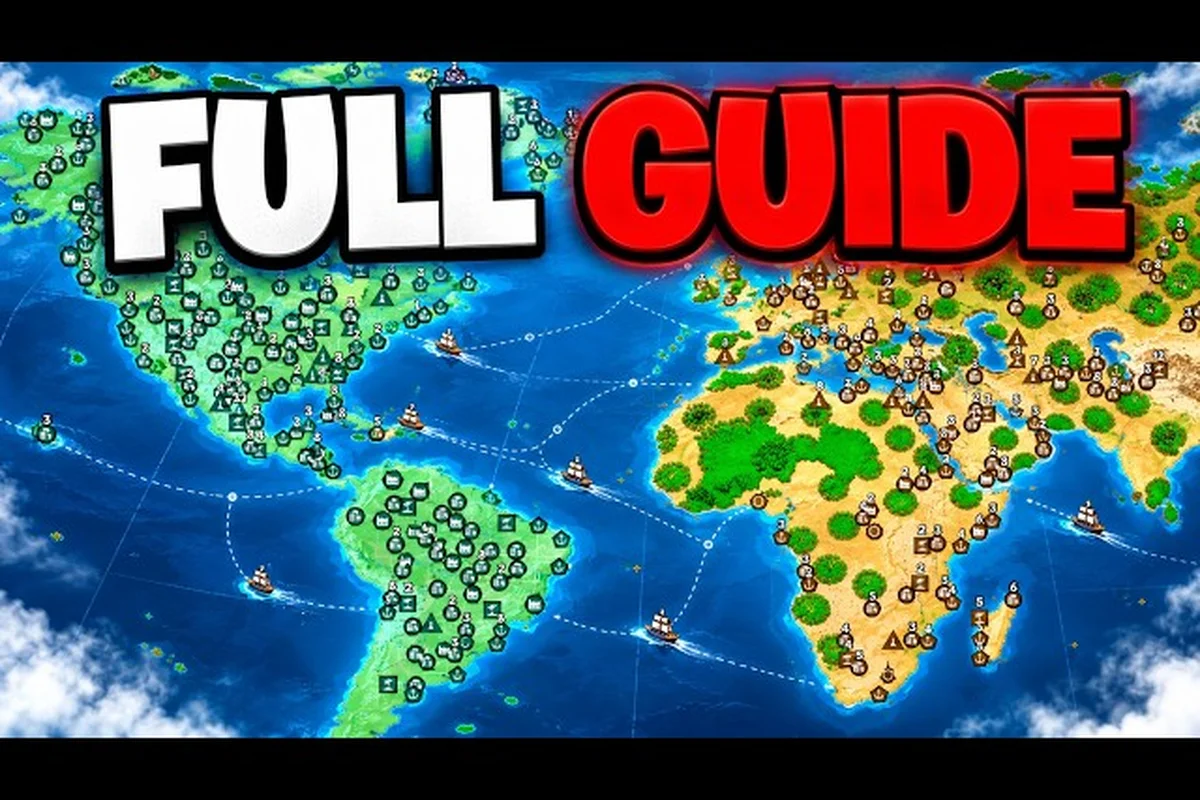
Winning in RoWorld depends on controlling territory without overextending your economy or military. This roWorld strategy guide explains how to expand safely, attack one front at a time, defend vulnerable cities, and turn captured land into lasting world control. A practical example is the early-game city tier: prioritize resource production and upgrade costs before committing troops to distant targets, because every captured settlement adds upkeep, garrison demand, and a new border to monitor. If enemy pressure appears on two fronts, pause the second offensive and reinforce the weaker city with existing troops instead of splitting the army evenly; concentrated defense can prevent a single breach from cascading into lost territory.
RoWorld Strategy Fundamentals for New Players
RoWorld is a competitive world-control strategy game built around expansion, alliances, cities, ports, factories, and military power. According to the official RoWorld game page, a server can include up to 55 players, while the map accommodates 88 player nations and hundreds of tribes. The listed victory condition is controlling 80% of the world, so territorial progress matters even before direct combat becomes necessary.
That scale changes how beginners should think. Winning one skirmish does not automatically create a winning match, and racing across the map can leave your capital and economy exposed. A useful roWorld strategy guide therefore needs to connect military action with economic development, territorial defense, and careful diplomacy.
| Strategic priority | Immediate objective | Why it matters |
|---|---|---|
| Secure nearby land | Claim empty territory before rivals | Creates room to grow without starting a wider war |
| Build economic capacity | Improve cities, ports, and factories | Supports expansion and military recovery |
| Preserve troop reserves | Avoid committing every unit | Leaves room to respond to another front |
| Consolidate borders | Connect and protect important territory | Prevents isolated gains from becoming liabilities |
| Control key regions | Deny rivals easy access to useful land | Reduces pressure from multiple directions |
Scout the board before the first move
A strong opening is not a fixed opening. Match conditions, neighboring activity, and available land should shape your first decisions. If aggressive players are contesting every border, securing a compact region may be wiser than claiming distant patches. If your neighbors appear inactive, controlled expansion can give you room to build.
Early scouting is the first practical skill. Look at where strong nations are developing, which coastal zones remain open, and whether an alliance border sits between you and a larger threat. Do not attack merely because a border looks exposed; exposed land can conceal a trap if the target has a strong military reserve.
| Opening situation | Better first move | Main reason |
|---|---|---|
| Several empty regions are nearby | Claim adjacent land | Growth adds fewer exposed routes |
| A powerful nation dominates one side | Expand in another direction | Avoid an early multi-front conflict |
| Land is divided by a weak neighbor | Assess the border carefully | A weak neighbor may still block a strategic route |
| Many players are clustered together | Secure outer space first | Open space can be safer than contested territory |
Build an Early Game Priority
The strongest beginner plan is not to rush every upgrade at once. First secure a viable capital, claim nearby land, and identify the economic features you can use. Then add infrastructure and begin building a military presence. This order supports roWorld beginner tips because it reduces the number of exposed commitments during the busiest part of the match.
Community gameplay recordings consistently show players beginning near a capital, taking adjacent empty land, establishing an economy, and then interacting with neighbors. These are player observations rather than confirmed rules, but the sequence is practical: it turns a new nation into a stable position before inviting conflict.
For a broader introduction to the first match, the RoWorld beginner guide can help you understand the capital, nearby land, infrastructure, and military foundations before applying these priorities. A practical early-game example is to secure the capital and adjacent empty territory first, then use the available economic features to fund expansion; postponing an unnecessary attack reduces exposed commitments and keeps resource generation stable while your nation is still establishing its position.
RoWorld How to Expand Without Overextending
Expansion is strongest when each new piece of territory makes the next move easier. Chasing isolated land across the map may increase your area, but it can also stretch supply lines, divide your defenses, and create disconnected holdings. The better roWorld how to expand approach is to favor contiguous growth and a clear sequence of priorities.
Use a Contiguous Expansion Ladder
Begin with territory that touches your capital or existing border. After that, take one neighboring section at a time, preferably in the direction with fewer immediate threats. This creates a defensible core instead of scattered claims. A compact nation can redirect troops between nearby fronts more effectively than a large nation with isolated holdings.
| Expansion step | What to acquire | What to protect |
|---|---|---|
| First ring | Empty land near the capital | Capital and direct approaches |
| Second ring | Land that joins the first ring | Lines between the capital and frontier |
| Third ring | Strategic land or useful resources | Cities, ports, factories, and supply routes |
| Later ring | Valuable but exposed regions | Entire network supporting those regions |
Connected borders improve both defense and economy because they create more options for moving support. If one side is pressured, nearby units can reinforce it without crossing another nation’s territory. Disconnected borders create a different problem: each exposed region may require its own garrison.
Expand Through Opportunity, Not Routine
Expansion should answer what the map gives you, not follow a fixed number of tiles. A nearby unclaimed region may be ideal early, but later value can come from a port, factory location, or corridor that links your holdings. Since official costs and income rates are not published, compare locations by role and opportunity rather than assuming a precise economic return.
| Location type | Strategic role | Expansion consideration |
|---|---|---|
| Inland land | Supports a compact territorial core | Often useful for steady consolidation |
| Coastal territory | May support port access and maritime movement | Consider exposure to attacks from multiple directions |
| Factory area | Supports military or industrial development | Strong value when connected to the main nation |
| City-centered land | Supports population and economic activity | Often deserves stronger protection |
| Narrow corridor | Connects separated holdings | Can be strategically valuable but difficult to defend |
A strong expansion plan follows four decisions: what role the new territory should fill, how it connects to your existing holdings, which threats it creates, and whether you can defend it. For example, capturing a coastal territory with port access can improve maritime movement, but a narrow corridor may connect separated holdings while exposing troops to attacks from multiple directions. Because official costs and income rates are not published, judge expansion by strategic function and opportunity rather than assigning each tile a fixed economic value.
-
Secure the immediate border before looking farther away.
-
Choose the direction with the fewest active threats, not simply the most empty space.
-
Capture resources and functional buildings that support the next stage of growth.
-
Pause expansion to consolidate when a border becomes unstable.
This is also where understanding the game’s troop advantage matters. The RoWorld how to win a war guide focuses on military preparation, while this guide treats expansion as the foundation that keeps those military options open.
Balance Land Speed and Military Readiness
Rapid expansion can produce a large map view, but territory does not generate value if it is immediately lost. A moderate pace gives your economy time to support new borders, yet excessive caution can allow rivals to box you in. Use these signals to decide whether to continue:
-
Your capital is stable, and the nearest borders have room to defend.
-
New land is connected to infrastructure that already supports your nation.
-
You can maintain a reserve without exposing every other front.
-
The expansion route does not place a powerful rival between two parts of your territory.
If any condition fails, consolidate first. For example, if a new border leaves your capital unable to support a defensive reserve, pause that advance and improve infrastructure before contesting more land; the objective is not to claim a number of regions, but to build a nation that can retain them. A smaller, connected territory is easier to defend, resource, and expand from later, while an overextended map can expose supply routes and force your army to split between separate fronts.
RoWorld How to Attack and Choose the Right Target
Attacks should solve a strategic problem, such as opening a route, removing a border threat, or capturing a useful city. A battle launched because an enemy border is visible may consume troops, expose your capital, and damage an economy that needed stability. The better roWorld how to attack method is to prepare a target, commit at the right moment, and know when a second front would become too costly.
Score Potential Targets
Before attacking, identify what you want from the target. If you only want land, an isolated settlement may be sufficient. If you want a port, factory region, or strategic capital, your approach must reflect that objective. Community reports repeatedly favor focusing on one front at a time, which keeps your remaining forces available for an emergency elsewhere.
| Target consideration | Favorable sign | Warning sign |
|---|---|---|
| Military readiness | Opponent appears committed elsewhere | Opponent can shift troops toward you |
| Geography | Target offers a clear route or choke point | Attack requires several exposed approaches |
| Economic value | Capture strengthens your position | Victory offers land you cannot support |
| Timing | Your reserve can handle the front | Every available unit is needed for the push |
| Political impact | Attack discourages nearby threats | Several nations may see an opportunity |
Target concentration means selecting one objective rather than scattering attacks across several enemies. It also gives your allies a clearer reason to assist. If a valuable target is defended by multiple nations, coordinate first and establish a limited purpose, such as opening a corridor or tying down reinforcements.
Prepare the Attack in Stages
Preparation should occur before the first visible assault. Check the target’s troop direction, identify the city or region that matters most, and decide what success looks like. A good attack plan has three parts: primary objective, commitment limit, and withdrawal condition.
| Attack stage | Player action | Strategic purpose |
|---|---|---|
| Preparation | Scout, gather troops, and choose an objective | Limit uncertainty and focus resources |
| Commitment | Attack the selected front with the main force | Create a concentrated advantage |
| Exploitation | Secure the route, city, or territory gained | Turn the tactical gain into lasting value |
| Consolidation | Repair, reinforce, or redirect as needed | Prevent a counterattack from reversing gains |
Because exact troop percentages and damage values are not published, do not plan around invented numbers. Observe the battlefield, test the opponent’s response, and commit more resources only when the front is going as intended. The community attack-strategy video can provide a visual example of attack sequencing, but its tactics represent one player’s experience rather than verified balance data.
Know When Not to Attack
Discipline includes declining an attractive fight. An attack is risky when your capital is threatened, your economy is still developing, or your reserve exists mainly to guard another border. Two simultaneous wars can stretch attention even if each target appears manageable, so wait until income and troops can support the second front.
A useful decision rule is to postpone an attack when any of these statements is true: first, compare the expected territorial gain with the troops, upkeep, and travel time the strike will consume; then ask whether the target’s resources can be captured without diverting defenders from another frontier. If the operation requires splitting your field army, exposes your capital, or only pays off after several uncertain captures, wait for a stronger income tick and a clearer troop advantage.
-
The target’s value does not justify the exposure.
-
Your force depends on committing nearly everything.
-
Another rival is already testing a different border.
-
Winning the fight still leaves the captured area disconnected.
-
The timing depends on another player behaving predictably.
Patience in roWorld should be managed as a military reserve, not treated as passive inactivity. If a rival is weak, delaying the attack can allow your income tick to fund more troops, upkeep, and travel time before you commit. For example, holding a 2,000-troop force while your economy produces another 500 troops may preserve the advantage better than attacking immediately with a 1,500-troop army and forcing your capital to cover the operation’s upkeep. Create openings, then exploit them only when your field army can secure the target without exposing your capital or pulling defenders away from another frontier.
RoWorld Defense, Economy, and Alliance Decisions
Winning battles is difficult if captured land creates new vulnerabilities. Every attack should be matched by a defensive plan, and every defensive commitment should be supported by economy. The official game page lists cities, ports, factories, alliances, and nuclear weapons as core features, making territorial planning more complex than placing troops on a single front.
Protect the Functional Core
Not every piece of land deserves an identical defense. Your capital anchors the nation, while cities, ports, factories, and routes between them determine what the territory can do. Identify these components first, then protect their approaches. This produces the defense-in-depth principle: an enemy must pass through more than one layer rather than reaching a critical target immediately.
| Area | Defensive role | Main concern |
|---|---|---|
| Capital | National center and fallback position | Direct pressure and loss of control |
| City cluster | Population and economic base | Concentration of value |
| Port area | Maritime access and connection | Attacks from coastal directions |
| Factory area | Military or industrial support | Disruption of production |
| Border corridor | Movement between key regions | Pinching or splitting the nation |
| Outer expansion | Buffer and forward position | Risk of being cut off |
Forward space is useful when it gives you warning and options, not when it pulls every defender away from the core. A narrow exposed region can be abandoned temporarily if preserving it would leave the capital defenseless. Conversely, a city with nearby open land may be easier to reinforce than an isolated stronghold.
Build an Economy That Supports Recovery
Economic development gives you more than a larger score; it helps replace losses and sustain another front. Because RoWorld does not publish exact income rates, building costs, or unit multipliers, judge the economy by what it enables. A strong economy should support troops, recover from a failed attack, and keep valuable regions connected.
Community gameplay often emphasizes capturing territory first and then consolidating it, which matches the economic sequence seen in the RoWorld world domination community video. The creator demonstrates how control can expand over one match, but the result is an example rather than a guaranteed benchmark.
| Economic stage | Player focus | Defensive implication |
|---|---|---|
| Establishing | Capital and nearby land | Keep a small force against opportunistic attacks |
| Consolidating | Cities and useful infrastructure | Protect routes between developed regions |
| Expanding | Additional territory and strategic locations | Maintain reserves for a new front |
| Recovering | Restore capacity after losses | Avoid simultaneous commitments |
| Dominating | Control more of the world | Defend vital corridors and prevent counterpressure |
The RoWorld gold guide can help you understand income priorities, while the broader point here is simple: every military plan needs an economic foundation. For example, a player who captures several cities but cannot protect the routes between them may gain territorial control without gaining usable capacity; sustaining a second front, rebuilding after losses, and funding opportunistic attacks all depend on that underlying gold economy.
Use Alliances Selectively
Alliances can discourage attacks, divide targets, and create safer expansion routes. They are not automatically beneficial, though. A weak or poorly coordinated partner can expose you to conflicts you did not plan for. Negotiate around shared borders, agreed targets, and limits on further expansion.
Before joining an alliance, clarify several points that determine whether cooperation improves your expansion options or merely commits you to another player’s war. For example, a partner may be useful for dividing a major target, but can become dangerous if its march timing, frontline strength, or expansion direction differs from yours. Define these expectations before the alliance is formed, rather than trying to renegotiate after a city siege begins.
-
Which borders remain uncontested?
-
Who handles defense if the partner is attacked?
-
How are newly captured territories divided?
-
What happens when one member signs a separate truce?
-
Does the alliance prevent the player from independently approaching a major target?
The RoWorld alliance guide explains the diplomatic side in greater detail. Strategically, treat an alliance as a way to multiply viable choices, not as a permanent obligation to fight every enemy your partner selects. For example, an alliance can let your army focus on one major city while your partner pins another city’s defenders, but that advantage disappears if the partner’s march timing forces you into a prolonged siege or exposes your core to a counter-march. Cooperation should therefore preserve your ability to choose the next move.
Advanced RoWorld Strategy for Closing the Match
The final stage of a RoWorld match is rarely a clean finish. Large nations control useful corridors, smaller nations search for openings, and alliances may shift as the balance changes. Advanced play depends on identifying which map developments actually threaten your victory rather than reacting to every movement.
Hold passages that carry operational value
As the board becomes crowded, ordinary empty land matters less than land with operational value. Narrow passages, coastal access, city clusters, and connections between major regions can determine whether a nation expands freely or remains confined. A large territorial count is less useful when those areas are disconnected.
| Late-game signal | Likely implication | Strategic response |
|---|---|---|
| Major rivals border one another | Their focus may shift elsewhere | Contest exposed territory, but avoid an unplanned third-front war |
| Several small nations remain independent | A rival may use them as buffers | Monitor their alignment and military direction |
| A key corridor changes hands | Movement routes are narrowing | Reinforce or secure nearby connected territory |
| Opponent controls scattered land | Their holdings may be vulnerable | Target isolation, not only their strongest city |
| Your nation is surrounded | Access is becoming restrictive | Seek a diplomatic or military breakthrough quickly |
Threat mapping helps separate important events from noise. Mark strong rivals, active alliances, exposed regions, and your most vulnerable connection points. Update the map after major captures, because the value of a border can change when control around it changes.
Use Tempo Without Triggering Collapse
Tempo means acting before an opponent, but action also creates commitment. Rushing into several targets may look aggressive while leaving the core exposed. Instead, create one strong local advantage, use it to secure a valuable region, and only then decide whether the same force can handle another front.
A strong sequence is: use Tempo to force the opponent to defend one area, then shift units only after that distraction opens a safer expansion route. Rather than splitting your army across distant targets, concentrate enough force to threaten a second point and make the response predictable. This preserves your core economy from sudden counterattacks while turning pressure on one front into a territorial gain elsewhere.
-
Identify the opponent whose growth would cause the most trouble.
-
Choose one region that either protects your position or limits theirs.
-
Gather enough support to make that attack credible.
-
Commit while keeping a response path for another emergency.
-
Consolidate the result before starting the next objective.
The large territorial gains shown in community videos can be tempting, but they are match-specific outcomes. Treat the half-world gameplay demonstration as a demonstration of possible map swings, not a repeatable formula for roWorld how to win results.
Adapt as the Scoreboard Changes
A strategy that worked while your nation was small may fail after expansion because every new capital, connected territory, and occupied resource zone changes travel time, frontline width, and income pressure. For example, an early capital rush may secure nearby resources, but after claiming a distant expansion, defending two separated regions can stretch your troops and expose supply lines. Reassess these questions at major turning points: after a conquest, a truce, or an alliance shift.
-
Can we still defend the capital and our connected territory?
-
Is the next piece of land genuinely useful, or merely additional distance?
-
Are we forcing a battle because another player is advancing?
-
Would negotiation buy more space than combat?
-
Can the economy recover if this attack fails?
The strongest roWorld strategy guide cannot provide a perfect route for every match because the map changes around you. It should instead provide decision checkpoints. If your answer changes after a conquest, a truce, or an alliance shift, revise the plan rather than following an outdated opening.
RoWorld How to Win: A Practical Match Checklist
Consistent execution matters more than memorizing one elaborate opening. Use this checklist during a match to catch dangerous imbalances while there is still time to correct them. The aim is controlled growth: enough territory to pursue victory, enough stability to protect it, and enough military capacity to choose your battles.
| Match phase | Strategic question | Corrective action |
|---|---|---|
| Opening | Are we secure and growing? | Claim nearby land before risking a distant attack |
| Early midgame | Is the economy supporting the territory? | Consolidate instead of expanding across every border |
| Midgame | Can we handle one major front? | Select a target and preserve a reserve |
| Expansion | Is new land connected and useful? | Stop at defensible borders and reinforce key routes |
| Late game | Which locations threaten the win? | Prioritize chokepoints, cities, and corridors |
| Recovery | Did a loss create lasting weakness? | Rebuild the core before attempting another conquest |
Review Warning Signs
Most losing positions in roWorld emerge from small, repeated mistakes rather than one spectacular defeat. Watch for signs such as an attack timer expiring before reinforcements arrive, a resource queue draining faster than the economy can rebuild, or a capital defense that repeatedly diverts troops from distant fronts. For example, if a war is won without securing the occupied city, the victory may still consume reserves and expose the capital to counterattack; review each battle for territory control, troop losses, and economic stability before committing to the next expansion.
-
Continuous expansion without consolidation leaves captured land unable to support itself.
-
Multiple unresolved wars divide attention and eliminate strategic reserves.
-
No reserve makes the first emergency dictate every later decision.
-
Ignoring neutral territory gives stronger rivals room to meet and align.
-
Treating every border equally spends resources on areas that do not affect the result.
-
Chasing distant targets disconnects your military from the capital.
-
Confusing territory with control overlooks whether important areas remain secure.
The Final Push
When a large part of the map is under pressure, prioritize the smallest set of actions that can produce a meaningful advantage. A single secured corridor may unlock expansion more effectively than a broad but fragile advance. Choose goals that create clearer routes, stronger resources, or safer access, and align your allies around the same purpose.
The final phase of roWorld how to win comes from coordination between economy, defense, and force. Keep your capital safe, protect connected holdings, and attack where your position is strongest rather than where the enemy appears weakest on a map. If that sequence produces a large territory, you will also have a better chance of sustaining it.
Frequently Asked Questions
What is the most important roWorld beginner tip?
Secure nearby territory, support your capital with a basic economy, and preserve troops for unexpected attacks. Avoid expanding toward several powerful neighbors at once, because each new border can demand attention. The official 80% world-control objective rewards broad possession, but disconnected or unstable land can disappear quickly.
Should I attack a stronger nation early in RoWorld?
Usually not. Early attackers often spend military resources before their economy or borders are secure, especially when the target has access to reinforcements. Scout first, identify one valuable objective, and wait until you can commit a concentrated force while keeping protection for another front.
How much land should I control before attacking?
No official land threshold guarantees success, because map conditions and opponent strength vary. Expand until your capital, connected territory, and key infrastructure are stable, then test one front while retaining a reserve. If more territory makes your borders harder to defend, consolidate before pressing farther.
Is it better to expand inland or toward the coast?
Choose the area that supports your next objective and remains defensible. Coastal regions can offer ports and broader access, but they may expose you from several directions. Inland territory can be easier to consolidate if it connects your core. Evaluate the location’s role rather than assuming one type is always superior.