
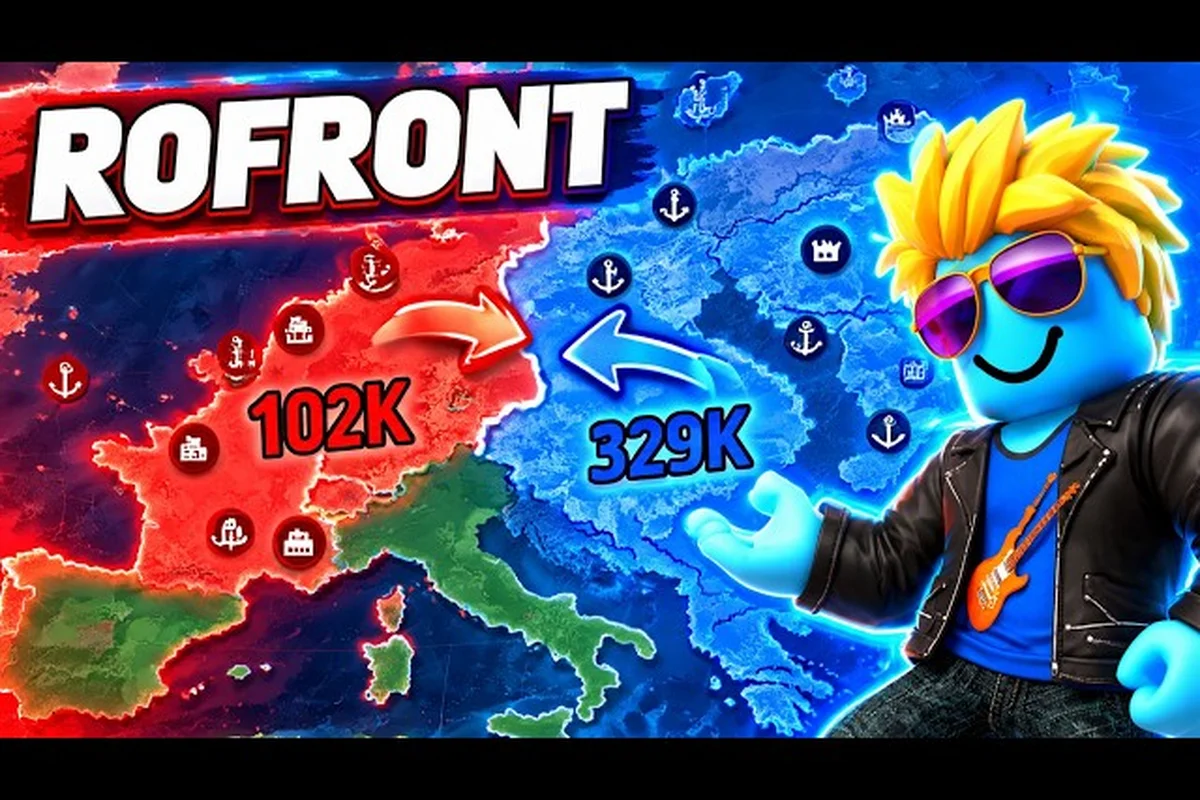
Understanding how gold works in roWorld gives you the foundation for a stronger nation: gold supports your economy, limits risky overspending, and helps you decide which cities, ports, and factories deserve priority as your territory expands. Because gold also funds military actions, including alliance requests and defenses against nuclear threats, a balanced treasury can prevent one costly front from draining development elsewhere. In practice, reserve enough gold to maintain key cities and ports, then compare factory investments by their contribution to production instead of expanding every region at once.
roWorld How gold works: The economic foundation
Gold is the main currency used to fund your nation's development, but the official Roblox page does not publish a complete income formula, building prices, or upkeep values. That means you should treat exact numbers shown by other players as community observations rather than permanent rules. The broader system is still clear: you need a sustainable source of income, save for future construction, and avoid committing every available coin to a single urgent war.
The official RoWorld game page describes a strategy game built around nations, cities, ports, factories, alliances, and nuclear weapons. It also identifies an 88-nation map and a victory condition based on controlling 80% of the world. Since expansion can be substantial, your gold plan must account for infrastructure that supports both peaceful growth and occasional conflict.
| Gold-related element | What it affects | What is officially confirmed |
|---|---|---|
| National income | Builds the reserve available for spending | The currency funds development, but no rate is published |
| Existing infrastructure | Supports continued economic activity | Cities, ports, and factories are official features |
| Combat preparation | Creates an opportunity cost before an attack | Troops and territory systems exist, but no prices are listed |
| Construction | Adds economic or logistical capacity | Building placement affects nation development |
| Surviving income | Preserves recovery options after losses | Exact maintenance values may vary or be unpublished |
The most important principle is that gold is not merely a score attached to your account. It is purchasing power in motion: coins today may become land access, transport capacity, production, defense, or recovery later. A nation with little gold may look powerful while its expansion is fragile; a nation with a steady reserve can react to a neighbor’s attack, repair its position, and continue building.
Where income comes from
Player-created cities and economic structures appear to form the foundation of the economy, while ports and factories contribute distinct logistical or production roles. Because exact formulas are not published, a reliable explanation focuses on the decision sequence instead of inventing rates. First, establish a city. Then secure a stable area where it can operate. Next, evaluate a port if your position or trade route benefits from one. Add a factory when production and expansion have become more important than immediate reserve preservation.
Community gameplay often shows players expanding into nearby unclaimed territory before investing heavily in infrastructure. That approach makes intuitive sense: a city becomes more valuable when it is connected to useful land, yet building too far ahead can leave a new nation unable to afford troops or necessary connections. The practical answer is to improve the territory you already have, then test a small expansion before making a large purchase.
Why the exact formula changes
Gold generation can be affected by your territory, infrastructure, activity, and version of the game. Because the developer has not released a public balance sheet, a player’s screenshot is useful for comparing early and late play but unreliable for predicting another account’s exact balance. The most durable rule is to compare income stability over time, not a single payout.
Keep a simple ledger with three entries, updating it after each income or spending event rather than only at the end of a battle. For example, record 500 gold from cities, 300 gold from ports and factories, and 200 gold committed to troops, then note the 300-gold balance still available for emergencies or upgrades. This creates a traceable comparison of gold generation and gold commitment across territories, infrastructure, and activity, making it easier to judge whether income stability is improving even when the total balance changes.
-
Gold earned over the current period.
-
Gold committed to cities, ports, factories, troops, or other needs.
-
Gold still available for emergencies and the next stage of growth.
A large gold balance is not proof of a strong economy: it can be the result of a one-time city or factory payout, while a smaller reserve may come from steady income across ports, cities, and other sources. For example, 1,000 gold earned from a single event and then spent on troops is less sustainable than 600 gold generated regularly, with part reinvested into cities and factories. Tracking gold earned, gold committed, and gold still available exposes whether income is replacing spending and whether a territory can support future upgrades without an alliance request.
roWorld How cities work: The center of national growth
Cities are the practical anchor for a nation’s economy, and understanding roWorld how cities work clarifies why location and expansion order matter. A city provides a place to organize activity, develop territory, and connect other structures. Its value is not isolated; it depends on the land around it, the security of nearby borders, and how well the rest of your national plan supports it.
Cities also give economic development a physical identity. When a player says their capital is growing, they usually mean more land, stronger connections, and additional infrastructure around that center. Since RoWorld is built around territory control, a well-placed city can make nearby expansion more coherent than a collection of disconnected holdings.
| City position | Main advantage | Main risk | Better approach |
|---|---|---|---|
| Near the national center | Supports balanced development | Can become exposed if the front moves | Keep strong infrastructure around the capital |
| Near a border | Supports territorial defense and expansion | May face early pressure | Build after the area is reasonably secure |
| Near useful coastline | Can improve access to port value | Requires additional gold investment | Pair it with a port strategy |
| Far from other structures | Creates a new economic hub | Routes and upkeep may become inefficient | Develop in deliberate stages |
The capital-first approach
Begin with one capital and make it productive before scattering attention across distant claims. A common mistake is to rush several new cities and then wonder why the treasury is empty. The better sequence is to strengthen the capital, protect its surroundings, and only add another city when there is a clear strategic reason.
The building steps in the RoWorld how to build guide can help you plan placement around troops, gold, ports, and expansion. A city should solve a specific problem: hold a border, support a port, develop a remote region, or create a second economic center. If you cannot name that purpose, you may be expanding faster than your economy can support.
City order during expansion
Once the capital is established, a sensible progression is to claim adjacent land, secure the first route outward, place the next city where it extends that route, and then decide whether the region needs a port or factory. Territory in RoWorld grows through border-connected conquest, so each new city should ideally strengthen a continuous chain rather than leave a fragile gap.
This distinction is crucial when comparing roWorld how cities work with roWorld how ports work. A city may create the local foundation, but a port can turn a favorable coastal position into a logistical asset. If you understand each structure’s role, you can spend gold on purpose rather than because every building menu option looks attractive.
City maintenance versus new construction
Existing cities may create a continuing economic role, but the developer has not published their exact maintenance formula. Avoid labeling a structure as free merely because no visible deduction appears immediately. Instead, watch the actual balance over several cycles and compare behavior before and after construction.
A practical test is simple: if your available gold falls, your new construction or defense is consuming resources, or your production slows. Because the game may adjust balance over time, this observation-based method is more reliable than relying on a fixed formula copied from an old guide.
roWorld How ports work: Trade, reach, and coastal strategy
Ports sit at the intersection of economy and geography, so roWorld how ports work matters whenever your nation reaches a coast or wants to connect distant holdings. A port is not simply another city building; it is intended to provide a distinct logistical connection. Its value rises when your territory includes valuable coastal space and falls when the surrounding area is weak, isolated, or beyond safe reach.
| Port condition | Strategic value | Gold decision |
|---|---|---|
| Secure coastal territory | Strong | Worth considering as a regional anchor |
| Coastal territory near an enemy | Conditional | Wait until the border can be defended |
| Port far from the capital | Long-term value | Develop in stages rather than rushing |
| No useful sea access | Low | Choose another economic project |
| Strong trade route or clustered city | Potentially strong | Prioritize after the route is stable |
Position before purchase
Players should evaluate the coast before placing a port. A port on a narrow, threatened shoreline may be strategically interesting but economically difficult to use because enemies can attack the same edge repeatedly. A safer harbor may be less dramatic, but it gives the nation time to benefit from the structure without making every battle a defense crisis.
Treat the coastline as part of a larger chain. Can your troops reach the coast? Does the route pass through friendly territory? Is the port close enough to support a city without exposing the entire economy? These questions matter more than cosmetic placement because the gold spent on a port cannot simultaneously remain available for troops or another city.
Port development sequence
The safest progression begins with securing the coastal claim, then protecting the route from the capital, followed by placing the port. Afterward, evaluate whether the new structure should be defended immediately or connected to a growing city network. This sequence creates a reason for the port instead of treating it as an isolated project.
The city and building overview can help compare how cities, ports, and factories fit into the same national layout. If your region has several coastal structures, remember that adjacency can create a logistical advantage, although the exact connection bonus is not publicly documented.
When a port deserves priority
Prioritize a port when your nation has secured enough territory to make coastal infrastructure useful, when another major nation controls nearby land, or when your current gold reserve can survive an interruption. Delay it when your borders are unstable, your treasury is nearly empty, or your capital still lacks a dependable economic foundation.
The distinction is strategic rather than numerical. Port value comes from context: secure access, useful routes, and a defensible location. Community reports of a particular port outperforming another setup are useful, but they should not be converted into a universal rule.
roWorld How factories work: Production and economic depth
Factories add a production layer to a nation, making roWorld how factories work a central question for players who want more than simple early expansion. A factory should represent an economic function that your territory can sustain. Like ports, its effectiveness depends on the surrounding network, so placement and national development matter more than the building icon alone.
| Economy stage | Factory priority | Reason |
|---|---|---|
| One-city opening | Low | First establish a stable income source |
| Early multi-city nation | Medium | Begin connecting expansion into production |
| Secure regional network | High | Multiple nearby centers can support deeper specialization |
| Economy under constant pressure | Low | Defense and reserves take priority |
What production changes
Factories convert a developed territory into a more purposeful economic network. The exact output and production cycle are not published in the official material, so you should judge the structure by observable results: whether the nation gains resources steadily, whether its development remains active, and whether it can continue improving after a fight.
A factory also creates a tradeoff. More infrastructure can strengthen long-term growth, but every new project reduces liquid gold. Some players overreact by building rapidly, while others become too cautious and fall behind. The best balance is to maintain enough reserve for an emergency while investing in one project that fills a clear economic gap.
Factories and cities need different priorities
A city is valuable when it anchors land and activity; a factory is more relevant when it fits a production network. Placing a factory too early may result in a structure whose purpose is unclear. Before buying one, identify the region it will serve and make sure the nearby cities and routes are already supported.
The broader RoWorld economy mechanics explains how territory, combat, and economic development interact. That context is important because a factory cannot replace soldiers when an enemy is taking land, just as a large army cannot create lasting value without economic support behind it.
A staged factory plan
Use three checkpoints. First, verify that your capital can generate a stable flow of gold. Second, secure a second region and connect it to your existing territory. Third, add a factory when production can strengthen the entire network. If the balance begins falling rapidly, pause construction and reassess whether a factory is the right next investment.
Community videos have shown large gold totals when players concentrate on economy rather than constant attacks, although those recordings do not document a precise formula. Treat the pattern as a strategy observation: patient development can produce a larger reserve, but only if spending remains controlled.
roWorld How nukes work: Cost, risk, and strategic deterrence
Nuclear weapons are powerful but situational, so roWorld how nukes work should be understood through their consequences rather than a fabricated damage formula. The official game page lists nuclear weapons among the core features, yet it does not publish their gold cost, radiation range, damage, or cooldown. Those exact values must remain unspecified unless the in-game interface displays them.
A nuke can punish an aggressive enemy, damage clustered territory, or create a strategic opening. It can also waste a precious share of your treasury and provoke retaliation. Because gold is also your ability to rebuild, using it on a weapon is a direct exchange of future flexibility for immediate power.
| Situation | Nuclear option | Main concern |
|---|---|---|
| Enemy occupies valuable land | Potentially useful | Target selection and retaliation |
| Treasury is near empty | Generally poor | No reserve remains for recovery |
| Enemy is expanding rapidly | Strategic consideration | A delay may make the problem larger |
| Nation is already dominant | Rarely necessary | Spending may be better on economy |
| Several enemies threaten different borders | Limited | One weapon cannot answer every front |
Opportunity cost is the real price
The most useful way to evaluate a nuke is to ask what the same gold could otherwise support. It might fund city development, secure a port, improve factories, or maintain troops on another border. A weapon can remove an immediate problem, but it cannot create the economic depth required to replace the territory lost afterward.
This makes the nuke a last-resort economic decision, not automatically a last-resort combat decision. A player may reasonably use one when the threatened loss is severe and the alternative is worse. The decision becomes poor when launched early, without a clear objective, or when ordinary defense would solve the problem.
Read the current interface
Because balance can change, check the in-game purchase panel for current gold requirements and available targeting information. A community video may be helpful for understanding the general experience, but it should not replace the live interface. The Economymaxxing and 100M Gold community video illustrates the scale players can reach, not a guaranteed return on nuclear spending.
Do not launch a weapon merely because an opponent crossed a border. First consider whether your capital, cities, and factories are secure, whether diplomacy can buy time, and whether your gold reserve is strong enough to recover. Strong deterrence can also come from a credible army, favorable territory, and alliances that discourage attacks.
roWorld alliance request: Borrowing strength without losing control
Diplomacy changes how safely you can spend gold, which is why roWorld alliance request deserves a place in the core economy discussion. An alliance can provide protection, open coordination, or a shared path toward territorial goals. However, an alliance is a relationship, not a bank, and its terms should be understood before money, troops, or strategic commitments are exchanged.
The official listing confirms that alliances are a major feature, while the RoWorld alliance guide explains the practical considerations behind forming one. A useful request states exactly what you need, what you can offer, and how long the arrangement should last. Vague requests create mismatched expectations, especially when two nations have different borders, resources, and war plans.
| Alliance condition | Economy impact | Diplomatic caution |
|---|---|---|
| Equal neighboring powers | Potentially stable | Divide roles clearly |
| One nation needs urgent help | Short-term support | Define what happens afterward |
| Partners compete for the same land | Unstable | Keep claims separate |
| One side has greater gold | Unequal leverage | Avoid open-ended promises |
| Shared long-term enemy | Clear incentive | Set boundaries around gains |
A clear request template
A concise request identifies the problem, the desired response, and the time frame. For example, a player might ask a neighboring ally for temporary support against an attack, propose a mutual defense against a third nation, or suggest dividing activity by region. Specificity reduces accidental conflicts and makes it easier to end the arrangement cleanly.
An alliance request should also consider gold indirectly. Supporting an ally can require troops, construction, and attention that reduce your own development. A formal agreement is not enough if either side cannot sustain its commitments. Consider the strategic value of cooperation, but remain aware that every shared plan creates an opportunity cost.
The link between alliances and gold
Stable diplomacy can preserve your treasury because fewer resources are diverted to constant border fights. It can also create a safer environment for cities, ports, and factories to operate. Conversely, a poorly aligned partner may pull you into a distant conflict at the moment your economy is weak.
When considering an alliance request, use a three-part check that measures the request against your current gold income, military capacity, and strategic objectives—not just the immediate reward. For example, if an ally offers gold but demands access to a strategic port, compare the port’s trade value with the risk of losing a key shipping route during a war. A worthwhile request should improve your treasury or protect your cities and factories without creating a commitment your alliance cannot later afford.
-
Capability: Can the prospective ally reliably contribute what you need?
-
Compatibility: Do your goals avoid direct competition over the same territory?
-
Exit: Can the arrangement be revised or ended without an immediate collapse?
If any answer remains unclear, negotiate before committing major resources, because an alliance can redirect gold income toward an unwanted war and expose your cities, ports, or factories to combat damage. For example, if a partner requests a port access, compare the port’s trade value with the cost of defending it, then secure a clear exit condition and duration before paying. The wider RoWorld world-war guide can help you evaluate late-game alliances, where a broken commitment carries a much higher strategic and economic cost.
A practical gold strategy from opening to world control
Knowing roWorld how gold works matters only when the information changes decisions. Use a staged plan that protects your capital, expands carefully, reserves enough for conflict, and invests in infrastructure before the late game. The official victory condition is 80% world control, so the final objective requires sustained economic strength as well as successful attacks.
| Phase | Gold priority | Main action | Common mistake |
|---|---|---|---|
| Opening | Preserve flexibility | Establish and secure the capital | Spending before income stabilizes |
| Early growth | Build a second node | Add a useful city or nearby structure | Scattering across weak land |
| Regional stage | Improve efficiency | Develop ports, factories, and borders | Treating every project as equal |
| Multi-front stage | Hold a reserve | Strengthen the most threatened area | Empty treasury during diplomacy |
| Late game | Fund decisive action | Prepare for major territory gains | Neglecting recovery and defense |
Review your economy every day
Open each session by checking income, spending, and reserves. If your balance is growing, consider the next infrastructure goal. If it is shrinking, determine whether that is temporary construction, defensive spending, or an actual loss of economic activity. Do not make a major purchase without understanding which category the previous spending created.
Keep a reserve that reflects your risk. A peaceful region can operate with a smaller buffer than a nation facing several aggressive neighbors, although the game does not publish one universal percentage. Use your own recent changes as the baseline: if defense costs have risen, the buffer should rise too.
Avoid common overspending patterns
The first pattern is building every available structure. The second is paying for a weapon before securing the territory around your capital. The third is chasing a port or factory without a route. The fourth is treating alliance help as free production. The fifth is expanding cities faster than your economy can connect.
Each mistake converts liquid gold into a fixed or semi-fixed commitment. Since RoWorld’s victory condition is based on world control, fixed assets are useful, but only when they support a coherent national plan. Ask what the purchase enables before you make it.
Set purpose-based priorities
Assign each major purchase a single primary purpose and measure it against that objective. For example, if gold is committed to securing a border, treat border security as the success criterion rather than claiming the purchase also strengthens the economy. The same discipline applies to alliance requests, nukes, cities, ports, and factories: define the intended benefit first, then compare actual results with the resources committed. This makes trade-offs visible—for instance, whether a nuke bought exceptional deterrence was worth more than the city funding territorial continuity—and prevents a purchase from being retroactively justified by several vague goals at once.
-
A city for territorial continuity.
-
A port for coastal logistics.
-
A factory for economic specialization.
-
Troops for border security.
-
A nuke for exceptional deterrence.
This framework turns gold into a testable commitment rather than a vague reserve: if a nuke is purchased for exceptional deterrence, ask whether it produced a measurable change in enemy calculations; if a city is bought for territorial continuity, check whether it maintained control of the relevant territory; if a port supports coastal logistics, compare that outcome with the gold spent. Reviewing each purchase against its stated primary purpose keeps the gold economy accountable, makes successful objectives distinguishable from secondary benefits, and prevents a weak result from being excused by an unrelated claim about the economy, military power, or alliance strength.
Separate confirmed rules from community observations
The official source confirms the core world structure, the presence of cities, ports, factories, alliances, nuclear weapons, and the 80% victory condition. It does not publish the gold formulas needed to calculate exact income, construction costs, upkeep, troop ratios, or nuclear effects. Community observations are still valuable for identifying behavior, but they should be checked against the current game.
This distinction keeps your strategy honest: you can treat expansion capital and infrastructure as tools for national development without presenting them as a fixed gold generator. For example, a port may improve trade capacity and a factory may support production, but neither confirms a specific gold-per-minute yield without the current income formulas, construction costs, and upkeep values. When calculating roWorld gold income, separate confirmed resources from community observations, and check alliance request results against the live game so a temporary community estimate is not mistaken for a guaranteed purchase price or guaranteed return.
Frequently Asked Questions
Where does gold come from in RoWorld?
Gold comes from your nation’s economic activity, which is tied to the infrastructure and territory you develop. Cities form the foundation, while ports and factories can add distinct logistical and production roles. The official game page does not publish an exact income formula, so measure your own balance over time and treat community figures as observations that may change with balance updates.
Should I spend gold on a nuke or save it?
Save gold when the threat is manageable, your economy is weak, or you need troops for several borders. A nuke is more reasonable when the threatened loss is severe and the alternative could be worse, but it should not leave your nation unable to recover. Always check the current in-game cost because the official page does not publish a fixed price.
Is a port better than another city?
That depends on your territory. Another city is generally better for anchoring land and extending your territorial network, while a port is most useful along a secure and valuable coastline. Choose the city when expansion is the priority; choose the port when your nation has secured coastal space and can benefit from stronger logistics or trade access.
When should I build a factory?
Build a factory after your capital generates stable income and your territory has enough connected development to support production. Building it too early can leave your treasury thin without a clear economic payoff. If your nation faces constant attacks, prioritize defense and reserves until the borders are safer and production can operate with less interruption.
Should I accept an alliance request immediately?
Not without checking the request’s purpose, duration, and impact on your strategy. Confirm that you and the prospective ally want compatible goals, can contribute fairly, and have a clear plan for ending the arrangement. A good alliance can protect your economy, but a vague commitment can pull your gold and troops into a conflict that does not serve your nation.
Gold gives RoWorld its strategic depth because every expansion choice has a cost. Protect the capital, connect cities deliberately, use ports and factories for distinct purposes, and save enough for defense before pursuing world control. That approach turns roWorld how gold works from a hidden formula into a practical system for stronger, more resilient play.