
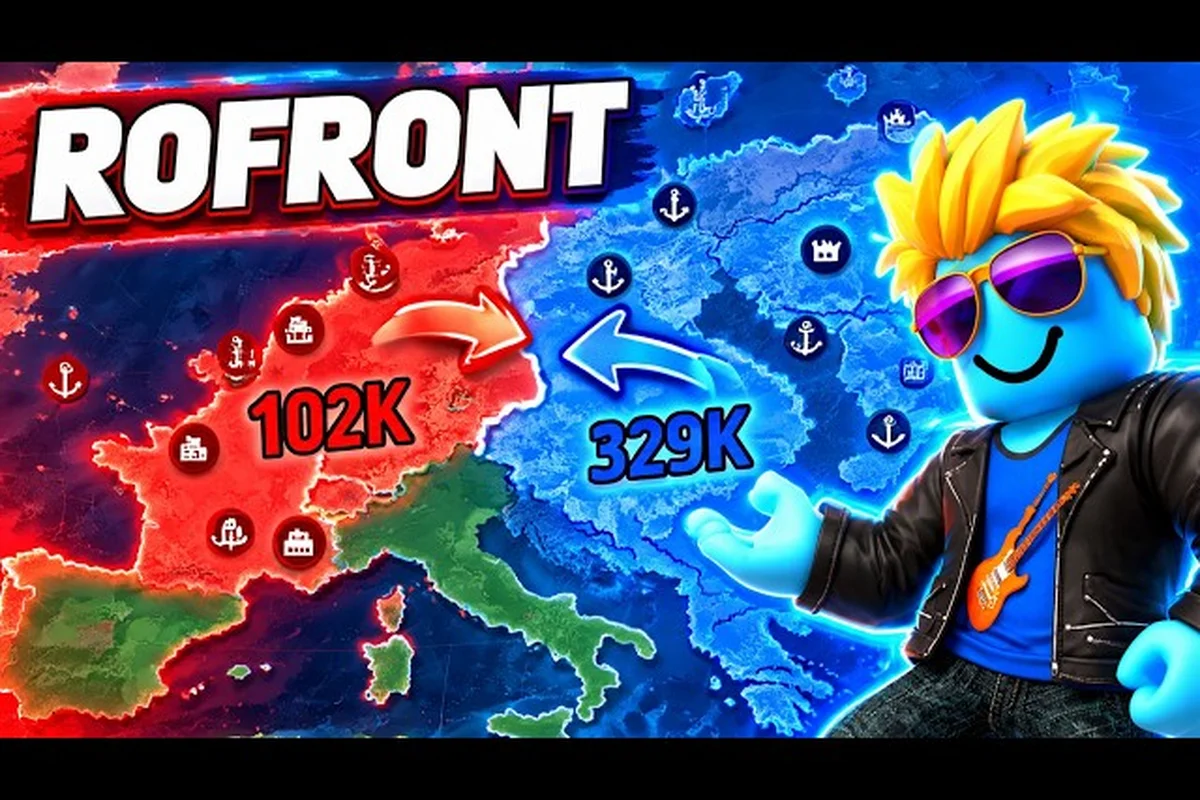
The roWorld territory system decides who controls the map, earns resources, and approaches the 80% victory goal. Learn how borders, expansion, combat, and defense work together.
How the roWorld Territory System Fits the Match
The roWorld territory system is the central loop of a match: claim land, develop the land you hold, protect your borders, and use captured territory to support further expansion. The official RoWorld game page on Roblox describes a strategy game with 88 player nations, hundreds of tribes, and a victory condition based on controlling 80% of the world.
That structure makes territory more than a visual score. Each controlled area can potentially strengthen your nation’s economy, military reach, and strategic position. However, RoWorld does not publish exact building costs, income rates, troop multipliers, or battle formulas, so players should focus on the relationships between systems rather than assume unsupported numbers.
| Official feature | What it means for territory play |
|---|---|
| 88 player nations | The map contains many competing political entities |
| Hundreds of tribes | Smaller groups can also influence the shared landscape |
| Up to 55 players per server | Individual matches involve a limited group of participants |
| 80% world control | The stated victory condition centers on territorial dominance |
| Cities, ports, and factories | Developed settlements appear tied to economic or military functions |
The Core Territory Loop
A practical match begins with selecting a starting nation, placing or maintaining a capital, and identifying accessible land near the existing border. Unclaimed or lightly held space provides the first expansion opportunity. Once the nation secures adjacent ground, its usable area and strategic footprint become larger.
Expansion is not simply a matter of moving a marker. The attacking side commits troops, the defending side can commit troops or rely on fixed defenses, and the result changes control of the contested area. The roWorld expansion mechanics therefore connect map position, military strength, and economic development into one continuous decision cycle.
What the official page states vs what videos show
The official listing confirms the scale of the world, the presence of multiple nations, and the 80% victory objective. Community videos show a common gameplay pattern: choose a nation, place a capital, expand into nearby unclaimed land, meet neighboring players, build an economy, and then negotiate or fight. These observations help explain the flow of a match, but they do not establish official numerical rules.
| Topic | Confirmed by the official page | Reported through player experience |
|---|---|---|
| Territory | World control drives the stated win condition | Expansion usually begins close to existing borders |
| Combat | Nuclear weapons and alliances are listed features | Players commonly compare troop strength before attacking |
| Economy | Cities, ports, and factories exist | Developed territory appears to support a stronger economy |
| Movement | The game is listed as world PvP | Troops need time to reach a relevant front |
Borders, Adjacency, and Land Capture
Territory grows through connected land. A nation cannot build an isolated empire without establishing a usable route from its current holdings. Adjacent expansion is the clearest pattern because it reduces the number of exposed borders and makes reinforcing newly captured ground easier than supporting a distant operation.
The map should therefore be read as a network of fronts rather than a flat collection of tiles. A long border may contain several vulnerable points, while a compact border can be defended with fewer resources if the nearby ground has suitable infrastructure. Geography matters because the best expansion route may lead toward cities, ports, factories, or other strategically valuable positions.
Choosing the Next Expansion Front
A frontier is worth considering when it offers more than empty space. Look for a border that connects your nation to useful settlements, limits an opponent’s room to grow, or creates another path toward your capital. Avoid corridors that lead into a narrow dead end unless that corridor protects an important objective.
| Expansion pattern | Advantage | Main risk | Best use |
|---|---|---|---|
| Along one continuous front | Easier reinforcement and clearer intent | A large front can become stretched | Main territorial push |
| Toward a neighboring capital | Reduces the opponent’s strategic depth | May trigger a stronger response | Contest for dominance |
| Through a narrow corridor | Can create a protected approach | Vulnerable if the enemy closes the route | Flanking maneuver |
| Around a valuable settlement | Adds economic or logistical value | Requires sustained fighting | Priority target |
| Across separated land | Opens a new area of the map | Hard to support and defend | Secondary expansion |
Because exact values are not published, the best target is not a tile with a known numerical advantage. It is the position that improves the overall condition of the nation. A settlement that supports the roWorld gold system can be more valuable than a wide patch of empty land, while territory that limits an enemy’s future growth may be worth securing even without an immediate economic benefit.
Why Connected Land Matters
A connected territory lets the roWorld troop system support multiple fronts more efficiently than scattered holdings. Troops must travel to the front, and disconnected claims can force them through longer or more dangerous routes. Connectivity also makes captured land easier to defend because reinforcements can move from established positions.
This does not mean every expansion should follow a single rigid pattern. A broad nation may need an additional front to prevent an aggressive neighbor from encircling it. A smaller nation may prioritize compact growth before seeking distant objectives. The useful question is whether each new claim strengthens the whole territory network or creates a burden that the roWorld defense system cannot support.
Troops, Gold, and Combat Connections
The roWorld troop system, roWorld gold system, and roWorld combat system are mutually dependent. Troops require resources to produce or maintain, resources come partly from developed territory, and combat determines which side can claim more land. A player who focuses on one element without the others may create a nation that is strong on paper but vulnerable in practice.
| Strategic priority | Territory benefit | Resource pressure | Main risk |
|---|---|---|---|
| Rapid military expansion | More land and broader options | High demand on the gold system | Fronts can outpace production |
| Economic development | Stronger foundation for the troop system | Slower visible map growth | Neighbors gain free time |
| Balanced growth | More resilient overall position | Moderate pressure in both systems | Requires constant assessment |
| Defensive consolidation | Stronger border control | Fewer opportunities for gain | Allows rivals to set the pace |
Gold as Expansion Support
Gold should be treated as the link between controlled territory and military pressure. The official game listing names cities, ports, and factories, but it does not publish a gold formula, so there is no responsible way to state a fixed income rate or building payoff. Instead, compare the visible state of your economy with your operational needs.
A nation launching repeated attacks may need more gold than a nation holding a fortified border. Before committing, ask whether the economic base can sustain the intended operation and whether the expected land gain would improve that base. This is the practical connection between the roWorld gold system and expansion: economic strength gives territorial plans options, while territorial weakness can make every planned attack harder to sustain.
Combat as a Contest for Land
The roWorld attack system is not merely a damage exchange. Its strategic purpose is to move a border. A successful attack can remove an opponent’s access to a region, expose a capital, or open space for the next stage of expansion. A failed attack can leave troops exposed and hand the defender time to reinforce.
Because RoWorld does not publish troop multipliers, attack percentages, or damage values, players should avoid treating community estimates as universal rules. Reports from players can still be useful for identifying tendencies, such as checking local strength, attacking with concentrated force, or choosing a favorable moment. The relevant guide to roWorld defense posts and troop counts explains the defensive side of those calculations.
Attacking and Defending a Border
The roWorld combat system creates a clear choice between pressure and preservation. Attacking may produce immediate land, but it also exposes the attacker to retaliation and can drain the force needed elsewhere. Defending preserves a border, but passive defense alone can surrender the initiative to an opponent with a stronger economy or more soldiers.
A useful attack begins with three checks: the target’s visible strength, the value of the land beyond it, and the condition of the attacker’s own borders. If the target is weak but surrounded by strong neighbors, victory may still expose your troops to immediate counterattacks. If the target is powerful, one attack may commit too many troops and weaken another front.
Attack and Defense Comparison
| Decision | Better when | Strategic purpose | Warning sign |
|---|---|---|---|
| Launch an attack | A nearby target is vulnerable and valuable | Gain land or reduce an opponent’s position | Your own border is already thin |
| Defend in place | The front is valuable and reinforcement is possible | Preserve territory and stall an enemy | The battle requires constant spending |
| Negotiate | Both sides prefer stability over immediate conquest | Secure borders without another fight | An ally may gain leverage |
| Redeploy troops | Another front faces greater danger | Prevent one loss from cascading | Movement exposes the old front |
| Build economy | The nation lacks resources for a decisive push | Create future flexibility | Delaying action helps rivals expand |
The roWorld attack system benefits from concentration and timing, but the game does not publish a universal “correct” moment. Community reports often emphasize checking recent movement and comparing forces before committing. A player who attacks only because an opening appears may still lose the larger match by weakening the rest of the nation.
Defensive Priorities
The roWorld defense system should prioritize the places where an enemy can turn local pressure into map-wide damage. Capitals, access routes, and territory linking major settlements are especially important. A border that is difficult to reinforce may be less valuable than a smaller, defensible position.
Fixed defenses can improve the practical challenge of attacking, but the official page does not provide their exact strength. Players should observe how missile silos, anti-air defenses, and other installations interact with troop movements while treating any numerical explanation from other versions as unverified. The most dependable pattern is to combine layered positions, sufficient mobility, and a clear fallback plan.
Expansion Strategies for Different Nation Types
Expansion mechanics work differently depending on the starting position and available resources. A coastal nation may prioritize ports and safe routes, while an inland nation may depend more heavily on cities, factories, and defensible corridors. These are structural observations rather than official terrain bonuses.
Early Expansion Priorities
The beginning of a match rewards compact, connected growth. Establish a capital, secure nearby land, identify the first useful settlement, and avoid creating several fronts that cannot be supplied. The goal is not to occupy the most space immediately; it is to create a territory that can support the next phase.
| Match phase | Main objective | Better action | Avoid |
|---|---|---|---|
| Opening | Create a viable base | Secure nearby land and basic resources | Rushing several distant targets |
| Consolidation | Connect holdings | Fill gaps and strengthen key routes | Leaving settlements isolated |
| Expansion | Gain useful territory | Focus on one coherent front | Attacking without reserve troops |
| Attrition | Outlast or redirect rivals | Protect the economy and reinforce weak borders | Spending everything on one assault |
| Victory push | Cover enough of the world | Coordinate fronts around shared objectives | Letting defense collapse elsewhere |
Coastal and Inland Approaches
A coastal position can support a strategy built around ports and separated approaches, but it must account for exposed borders. An inland position may have fewer directions to defend, yet every breakthrough becomes more important because the nation has fewer alternate routes. The right comparison is not coast versus land as a universal winner; it is land and logistics versus the military threats facing the nation.
| Position | Likely opportunity | Main strategic challenge | Useful focus |
|---|---|---|---|
| Coastal | Ports and broad movement options | Multiple possible approaches | Protect access while expanding |
| Inland | Cities, factories, central routes | Fewer fallback directions | Connect settlements and secure corridors |
| Compact | Dense reinforcement network | Limited land-gain targets | Focus on high-value neighbors |
| Spread | More possible fronts | Troop movement and supply strain | Consolidate before pushing again |
As the match develops, expansion becomes less about the first land you can take and more about whether your organization can support the area you have already claimed. That is where the roWorld expansion mechanics become a measure of national strength rather than a simple map statistic.
Late-Game Territory and the 80% Victory Goal
The official goal is 80% world control, which makes every border interaction relevant to the final objective. A nation can hold a large share without being safe if its territory is disconnected, weakly developed, or threatened from several directions. Conversely, a compact nation with secure settlements may be positioned to take more land later.
Late-game planning should compare several paths at once. A direct march may be fast against a weak neighbor, while a negotiated agreement may buy time for an economy. A defensive consolidation may preserve the lead, whereas a multi-front push may accelerate control but stretch the roWorld troop system too thin.
Tracking Progress Without False Precision
The official page gives the 80% target but does not publish a detailed territory percentage breakdown or a guaranteed control formula. Use the in-game display to observe your current position, then monitor the broader map instead of focusing on one number alone.
| Progress measure | What it reveals | Why it matters near the victory threshold |
|---|---|---|
| Current control share | Distance from the stated goal | Shows the scale of territory still needed |
| Number of exposed borders | Vulnerability of the position | Reveals how many fronts can create pressure |
| Settlement control | Economic and strategic anchors | Indicates where the nation can remain connected |
| Neighbor strength | Opponent capacity to counterattack | Identifies dangerous late-game targets |
| Troop distribution | Readiness across the map | Shows whether reserves can support a decisive push |
| Resource position | Ability to sustain another operation | Prevents expansion from hollowing out the base |
A good late-game plan has a primary objective, a defensive anchor, and a fallback front. The primary objective might be a shared border or a key settlement. The anchor protects the capital and main economy. The fallback prevents one counterattack from reversing the entire strategy. Players seeking a broader foundation can review RoWorld economy mechanics and the 80 percent win condition.
A Practical Playbook for Stronger Expansion
Strong territory play comes from reading the map, managing commitments, and connecting military decisions to economic strength. The following sequence is based on community gameplay patterns and established RoWorld mechanics, not on invented cost or combat formulas.
Before Committing to an Attack
Inspect the target border, neighboring land, and the state of the defender’s visible troops. Decide what the attack achieves: land, a settlement, reduced enemy access, or a safer route for later expansion. If the target offers no strategic value, taking it may consume troops without improving the nation’s position.
After Capturing Territory
Confirm that the new area is connected, usable, and worth defending. Establish its value before stretching farther. If it is weak, it may be better to reinforce a nearby settlement and protect a compact network. This approach supports the roWorld defense system because every captured tile does not need to become a major front.
Before the Final Push
Check the whole map rather than the obvious target. The official 80% objective can make distant territory look attractive, while an insecure border can undo the advantage. Save enough force to respond to a counterattack and ensure the economy can support the final operation. More details on staging a decisive conflict appear in the guide to winning a war with stronger timing and production.
| Decision checkpoint | Ask before acting | Positive reason to proceed |
|---|---|---|
| Expand a new front | Can we reinforce it later? | The route is connected and supportable |
| Attack a major neighbor | Is the gain worth the response? | The prize improves strategic position |
| Develop the economy | Will it fund the next phase? | Resources create future flexibility |
| Defend a border | Is it more valuable than another target? | Losing it would create a larger crisis |
| Divide the army | Can each force reach its front? | Each front has a clear mission |
The roWorld territory system rewards nations that treat land as a connected network of resources and fronts. Expansion, combat, and defense should reinforce one another rather than compete for attention, because a single overextended operation can undo the value of earlier gains.
Frequently Asked Questions
How does territory control work in RoWorld?
RoWorld uses territory as the central measure of map dominance, and the official game page lists 80% world control as the victory condition. In practice, nations expand by taking adjacent land and contesting borders. The exact attack formula, income rate, and troop multipliers are not published, so reliable strategy depends on map position, visible forces, and the value of connected settlements.
Does territory automatically generate gold in RoWorld?
Territory can support the roWorld gold system, especially when connected to cities, ports, factories, or other developed positions, but the official page does not publish a fixed income formula. Players should compare their resource position before and after expansion. The safest interpretation is that developed territory improves economic capacity, while exact gold gains remain unconfirmed.
Should every nation attack immediately after starting?
No. Early expansion should usually create a connected base and secure nearby resources. A nation that attacks too soon may leave its capital, settlements, and borders exposed. The better approach is to establish enough strength for a coherent push while reserving troops and gold for the response an enemy attack may force.
How do troops support a large territory?
The roWorld troop system can reinforce multiple fronts, but movement takes time and divided forces may be vulnerable. Compact territory is generally easier to support, while widely separated claims require more careful deployment. Players should maintain a reserve for counterattacks and avoid treating every distant captured area as equally defensible.
What is the best way to defend the roWorld defense system?
The strongest defense combines connected territory, developed settlements, mobile troops, and useful fixed installations. Capital access and routes linking major settlements deserve special attention because their loss can damage the whole nation. Exact missile silo and anti-air values are not published, so observed match results should be treated as practical experience rather than universal formulas.