
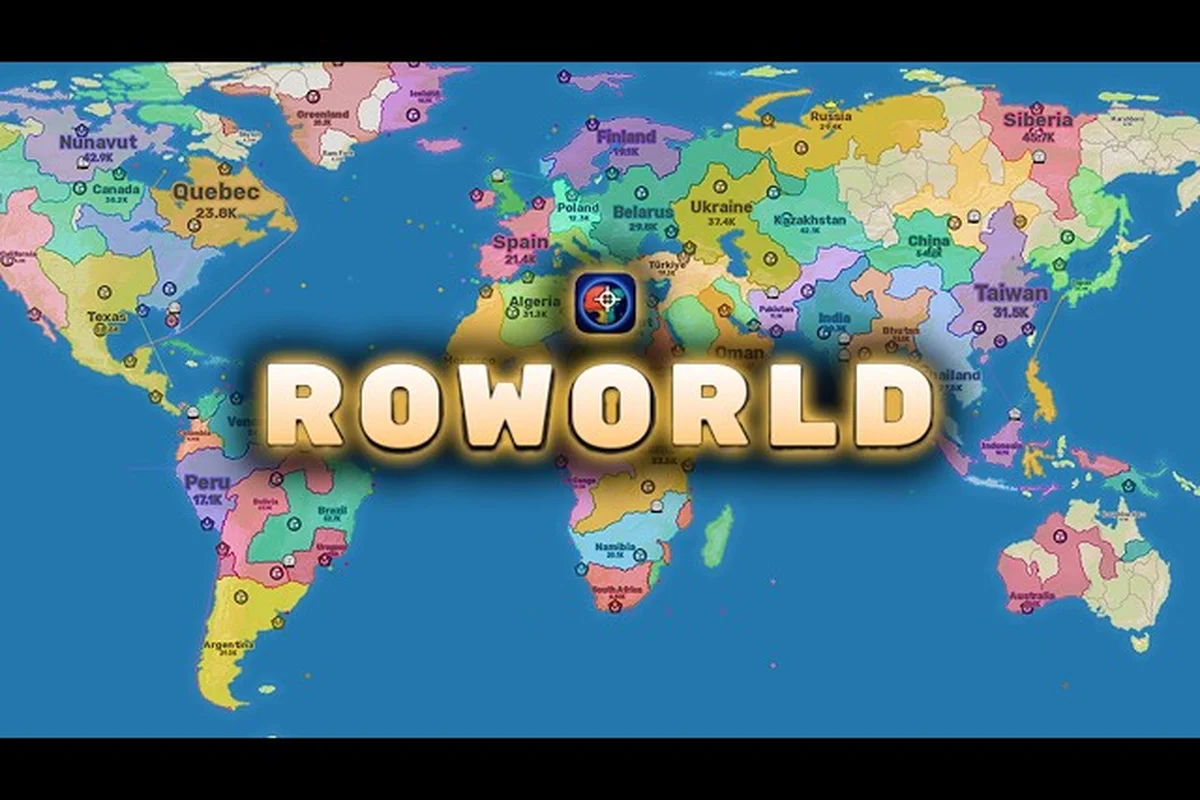
Choosing a defensive nation in RoWorld is more than picking a familiar flag: border safety, coastal access, expansion room, and your alliance plans determine whether a capital remains secure. The official Torrey Pines creator group confirms RoWorld’s large-scale nation format, while the choices below rank practical opening archetypes rather than unsupported win-rate statistics.
RoWorld best nation for defense: what the ranking actually measures
The roWorld best nation for defense is not a single universally dominant country, because territorial position and early decisions can outweigh a nation’s identity. This guide ranks defensive openings by Border Control, Coastal Protection, Expansion Safety, and Recovery Potential. These are strategic labels, not official power ratings or measured win rates.
RoWorld’s official Roblox listing describes servers with 88 player nations, additional tribes, cities, ports, factories, alliances, and nuclear weapons. Matches are won by controlling 80% of the world, so safe expansion matters as much as surviving the first border clash. A strong defense keeps a capital viable long enough to support that wider campaign.
| Defensive consideration | What it protects | Why it matters early | Main trade-off |
|---|---|---|---|
| Border Control | Capital and nearby cities | Reduces pressure from adjacent nations | May slow aggressive expansion |
| Coastal Protection | Ports and coastal territory | Limits sea-based approaches | Requires naval awareness |
| Expansion Safety | Unclaimed borderland | Creates room to meet neighbors | Keeps the player away from immediate action |
| Recovery Potential | Economy after losses | Helps rebuild after a failed defense | Rarely wins a direct contest alone |
The ranking framework is intentionally qualitative. RoWorld does not publish comparable troop multipliers, building costs, attack percentages, or income rates for every nation, so inventing exact values would create false precision. The official game page supports the broad features of the match, while nation-specific tactical observations come from community play.
Defense tiers at a glance
The strongest defensive openings share one trait: they make the attacker spend more time, resources, and attention to reach the capital. The best nation for defense is therefore a position that can absorb pressure while retaining a clear economic plan.
| Defensive tier | Opening profile | Best use | Risk to monitor |
|---|---|---|---|
| Top defensive choice | Safe capital position with useful terrain | Survive early contact and expand deliberately | Overconfidence can delay the victory threshold |
| Strong defensive choice | Balanced borders and flexible development | Play reactively without becoming reactive overall | Weak economy can crumble under repeated pressure |
| Solid defensive choice | Clear advantage with one strategic limitation | Build a focused defensive identity | The limitation may decide a poor match |
| Situational choice | Strong only when map position or alliances align | Test a riskier strategy | Vulnerable to coordinated enemies |
This is where the roWorld tier list explained: defense is not a single stat attached to a country. It is the relationship between starting location, neighboring threats, build order, water access, and the player’s willingness to negotiate. For a broader view of openings, compare this ranking with the RoWorld nation tier list.
Best defensive nation archetypes compared
Because the official materials do not provide a nation-by-nation defense score, the most useful roWorld best nation for defense comparison groups nations by the advantage they naturally encourage. A landlocked nation with broad interior access may create layers of territory around its capital, while a coastal nation can use ports and chokepoints if it develops a navy early.
| Nation archetype | Defensive strength | Best early objective | Weakest point | Ideal match condition |
|---|---|---|---|---|
| Large inland nation | Space to form layered borders | Secure inner cities before stretching outward | Slow reinforcement routes if overextended | Enemies approach from several directions |
| Compact inland nation | Short, controllable frontier | Fortify a tight core and specialize | Less room for mistakes | Player can defend without expanding |
| Coastal nation | Ports and natural water barriers | Build a functional navy and protect the coast | Exposure to a stronger fleet | Enemy strength is uneven |
| Island nation | Water separation creates a buffer | Control nearby waters and secure supply routes | Isolated if navy development fails | The player can sustain a navy |
| Flexible mixed nation | More than one practical opening | Adapt to the first neighboring threat | May spread buildings too thin | Map position changes during the match |
A Defensive Core is the capital and its immediate economic network, not simply the flag on the selection screen. A Border Buffer is land that gives defenders time to react, and a Chokepoint Plan turns ports or narrow approaches into defensive assets. These concepts work regardless of the chosen country.
The roWorld best nation for defense can also change during a match. A nation with an initially exposed border may become safer after an alliance absorbs one side, while a seemingly secure capital can become trapped if the player expands in the wrong direction. Treat the opening as a hypothesis and update it when neighbors appear.
Landlocked versus coastal defense
Landlocked starts are often easier to read because the player can watch land approaches and build outward from a capital core. Their main danger is being surrounded through rapid expansion. Coastal starts expose a different flank, but access to ports can make naval deterrence possible even when the land position is ordinary.
| Decision factor | Inland opening | Coastal opening |
|---|---|---|
| Primary threat | Multiple land neighbors | Land neighbors plus naval pressure |
| Early infrastructure | Cities, factories, interior roads | Cities, factories, ports, naval support |
| Defensive advantage | Time created by border distance | Water used as a buffer |
| Expansion pattern | Pie-shaped land growth | Land growth with coastal zones |
| Common mistake | Claiming every nearby tile | Ignoring ships while focusing only on cities |
Players who want the complete selection before committing can also review the RoWorld nation list. The key is to distinguish a country’s familiar visual identity from the actual defensive value of the territory that appears around the capital.
Defense building order and capital setup
The best defensive opening is created through setup rather than passive waiting. RoWorld’s official description identifies cities, factories, and ports as central features, while the community’s match footage shows a recurring loop: choose a nation, establish a capital, expand, meet neighbors, develop the economy, and then fight or negotiate. Defense should therefore be developed before tension peaks, not after a capital becomes surrounded.
| Phase | Priority | Defensive purpose | Decision rule |
|---|---|---|---|
| Capital placement | Confirm the core | Avoid starting with blocked expansion | Keep nearby options open |
| First expansion | Secure adjacent territory | Establish a border buffer | Prefer reachable land over distant targets |
| Economic setup | Support city and factory growth | Maintain recovery capacity | Strengthen the core before overextending |
| Border response | Fortify the threatened side | Prevent one-direction pressure | Concentrate rather than scatter defenses |
| Strategic pivot | Add ports, allies, or deterrent power | Address a different threat type | Reassess after each border change |
The Border Focus rule is central: reinforce the direction that can actually reach you, not a decorative area on the opposite side of the map. If a new neighbor appears to the east, the capital may need fewer new structures overall and better coverage in that direction. If two enemies approach from different angles, the player must protect the inner economic ring before extending the outer border.
Do not treat a nuke as a normal defensive building. Nuclear weapons are part of RoWorld’s strategic toolkit, but their deterrent effect depends on the broader military position. A nuke without cities or factories does not create a functioning national defense, and a strong army without a defended capital can trade one advantage for another. The RoWorld strategy tier list can help place troops, warships, and deterrence within a larger plan.
A practical first-phase checklist
-
Capital Safety: Confirm that the capital has room to grow before selecting a distant expansion target.
-
Neighbor Scan: Identify which directions contain active nations and which borders are still unclaimed.
-
Core Economy: Develop enough city and factory coverage to support the eventual army or navy.
-
Single-Front Priority: Concentrate the first defensive response on the most credible threat.
-
Recovery Plan: Preserve gold and construction capacity for repairs, expansion, or a necessary alliance.
-
Water Check: If the nation has a port, decide whether naval defense is immediate or still a future option.
This sequence comes from player observation rather than an official build guide, so treat its nation recommendations as practical signals rather than fixed rankings. Its main advantage is adaptability: when the exact nation, map position, or active neighbors change, the same defense checklist can shift from land-unit concentration to navy coverage or a fortified capital. Because roWorld includes multiple offensive and economic options, the nation best for defense may differ from the nation best for offense; compare border pressure, unit composition, and expansion timing instead of assuming one roster is universally strongest.
roWorld best nation for offense versus defense
The roWorld best nation for offense emphasizes forward pressure, rapid expansion, and the ability to overwhelm a neighbor before it consolidates. The roWorld best nation for defense instead emphasizes controlled borders, protected infrastructure, and enough depth to absorb a failed attack. Both can win because RoWorld’s victory condition rewards broad map control rather than permanent isolation.
| Strategic focus | Main objective | Early strength | Early vulnerability |
|---|---|---|---|
| Offensive opening | Take usable territory quickly | Forces opponents to react | Can stretch supply lines |
| Defensive opening | Make the capital difficult to attack | Preserves development time | Gives rivals room to grow |
| Balanced opening | Expand while keeping secure borders | Fewer catastrophic losses | Slower, more deliberate decisions |
| Nuclear deterrent | Discourage attacks through strategic threat | May influence negotiations | Expensive and dependent on military reach |
The roWorld best nation for offense may be a better choice when the capital has abundant safe land, nearby borders are weak, and the player can commit early. A defensive nation becomes preferable when the opening position is crowded, the economy is still fragile, or the map offers natural barriers.
Offense and defense also change during the match. A nation that begins defensively can shift into offense after completing a border ring, establishing a navy, or securing an alliance. Conversely, an early aggressor may become the more defensive side when opponents coordinate. The key is to preserve the ability to change roles without abandoning the economic core.
Match-state decision guide
| What you observe | Better strategic posture | Reason |
|---|---|---|
| Several close neighbors | Defensive consolidation | Multiple borders can become expensive to hold |
| Wide unclaimed land nearby | Controlled offense | Space rewards early expansion |
| Strong port access and weak land pressure | Naval deterrence | Water can discourage approaches |
| Weak navy and exposed coast | Inland defense | Avoid an unfunded naval race |
| Stable core and one clear threat | Focused offense | Remove the immediate rival before rivals multiply |
This is the core of the roWorld tier list explained: the same nation can occupy different tiers under different conditions. A ranking should help you read the board, not make you accept a fixed flag choice. If the available choices appear similar, use the decision table to identify the threat pattern and choose the position that answers it.
roWorld best nation for economy, navy, and nukes
Strong defense rests on more than walls. The roWorld best nation for economy needs dependable development, the roWorld best nation for navy needs usable ports and sustained ship production, and the roWorld best nation for nukes needs a military base capable of supporting deterrence. These are different strategic profiles, and their best opening can be combined with a defensive shell.
| Strategic profile | Foundation | How it supports defense | Best opening time |
|---|---|---|---|
| Economy | Cities, factories, and efficient land use | Restores capacity after losses | Start before border pressure |
| Navy | Ports and ship production | Deters coastal attacks | Develop before the enemy fields a fleet |
| Nukes | Military infrastructure and strategic reach | Discourages direct aggression | Build after the core is stable |
| Balanced | Multiple building types | Reduces dependence on one threat type | Develop according to the map |
| Defense | Protected capital and controlled borders | Buys time for other systems | Establish early |
The official Roblox listing confirms that ports, factories, and nuclear weapons are part of the wider match, but it does not publish comparative income, ship, or nuclear damage values. Therefore, this guide does not claim that one nation objectively produces the best economy or strongest fleet. Those qualities depend on the player’s building decisions and the nearby map.
For economic foundations, the RoWorld gold strategy guide explains how resource planning can support the capital. A defensive opening becomes easier to sustain when income is not being spent on distant land with no strategic value. For naval play, secure a port before treating water as a barrier, and remember that ships still require an economy behind them.
For nuclear play, build the surrounding military system before considering deterrence as complete. A nuke can threaten a target, but it cannot protect an exposed capital by itself. The practical sequence is to stabilize the economy, establish military production, explore the enemy’s location, and then decide whether a nuclear threat fits the wider strategy.
Balancing offense, economy, navy, and nukes
-
Offense First: Secure nearby territory before buying expensive deterrence, because control provides targets and strategic leverage.
-
Economy First: Protect development and prioritize buildings that make future military choices affordable.
-
Navy First: Use ports to create a credible coastal response, especially when the capital faces water access.
-
Nukes Last: Treat them as one layer of a complete strategy rather than a substitute for conventional defense.
These priorities are not a mandatory opening order. A strong player may reverse them when the map demands it. Their purpose is to prevent an expensive system from becoming the centerpiece of a strategy whose economy, borders, or capital are not yet secure.
Choosing the right nation for your play style
There is no defensible way to declare one country the permanent roWorld best nation for defense without official comparative data. The better answer is a pair of options: a controlled position for cautious players and a flexible position for reactive players. From there, map context determines the final choice.
| Player style | Preferred opening | Main build focus | Likely mistake |
|---|---|---|---|
| Cautious strategist | Controlled borders and protected core | Cities, factories, defensive depth | Waiting for enemies to grow unopposed |
| Early aggressor | Open land and weak nearby targets | Fast expansion, then consolidation | Winning land while the core stays weak |
| Naval planner | Reliable port and safe coastline | Ports, ship production, supply routes | Ignoring land defense |
| Deterrence strategist | Stable military base and strategic reach | Economy, military production, nukes | Prioritizing deterrence over defense |
| Adaptive general | Balanced nation with several viable borders | Flexible early build order | Changing plans without securing any system |
A Defensive Answer is the best opening for a player who prefers controlled risk and can identify threats early. A Flexible Answer has more than one viable development path, making it useful when a match changes after the first neighbor is met. A Power Answer is an offensive setup that can also consolidate well, but it should not be chosen merely because it sounds strongest.
Before finalizing, ask four tactical questions that expose whether a nation’s opening is genuinely defensive rather than merely slow: whether the capital can withstand an early strike, whether nearby land supports a border ring, whether coastal access enables navy production without exposing a flank, and whether the economy can replace a lost border. A Defensive Answer should pass all four checks, since protected cities, factories, supply routes, and strategic reach matter more than a headline power ranking; a Flexible Answer may tolerate one weak answer, but only if it has viable recovery paths such as fast expansion or consolidation.
-
Can the capital survive if the first attack arrives early?
-
Does the surrounding land provide room to establish a border ring?
-
Can water access support a navy, or does it expose an uncovered flank?
-
Is the economy stable enough to recover from one lost border?
If the answer to the first question is no, a faster offensive nation may create more risk than value, especially when a capital strike can arrive before factories, supply routes, or a border ring are secure. If the answers are consistently yes, the defensive nation becomes a strong foundation for a long match: protected cities absorb pressure, factories preserve production, and a stable economy can replace one lost border. For example, a controlled opening should use nearby land to stage a defensive perimeter rather than claiming every exposed tile; that preserves the core, creates time for consolidation, and prevents an early rush from turning a temporary setback into a broken economy.
Final defensive ranking and practical conclusion
The final ranking places large inland positions first for layered border protection, compact inland positions close behind for concentrated defense, and coastal or island openings in the same strong range when the player can develop ports and naval support. Mixed nations rank highly for flexibility, while aggressive starts sit lower in this specific defense-focused list even if they excel in other categories.
| Final tier | Defensive choice | Why it earns the placement | Best upgrade condition |
|---|---|---|---|
| Top Pick | Large inland position | Offers the most layers of land defense | Secure inner borders before expanding |
| Top Pick | Compact inland position | Minimizes the frontier and supports concentrated defense | Strengthen the core economy |
| Strong Pick | Coastal position | Ports and water can deter attacks | Build naval support early |
| Strong Pick | Island position | Natural separation creates buffer space | Protect supply and control nearby waters |
| Strong Pick | Mixed position | Multiple choices suit changing threats | Avoid spreading resources too thin |
| Situational Pick | Aggressive opening | Can win quickly when conditions are favorable | Consolidate before facing multiple fronts |
Remember that this table compares opening archetypes, not measured nation statistics. The official information confirms the game’s scale, objectives, and feature set, while community experience supplies the tactical patterns. Any guide that claims exact national power values without published evidence would be less useful than this transparent framework.
The practical takeaway is simple: protect the capital first, build a functional economy, concentrate defenses on the credible threat, and use offense or deterrence once the core can support it. Whichever flag you select, the surrounding territory, neighboring players, and your first building decisions will determine whether the roWorld best nation for defense becomes a genuine strength or merely an attractive label.
Frequently Asked Questions
What is the roWorld best nation for defense?
No official nation-by-nation defense ranking exists, so the strongest opening is usually a large inland or compact position with safe borders and room for cities and factories. A coastal nation can also defend effectively when its player develops ports and naval support before enemies arrive. The starting location and early build order matter as much as national identity.
Is a coastal nation better for defense than an inland nation?
A coastal nation gains a potential water barrier, but that advantage is meaningful only if the player can establish a functional navy. An inland nation usually offers easier reinforcement and fewer exposed flanks, although it can still be surrounded through careless expansion. Compare immediate coastal pressure with available port access before choosing the opening.
Does the roWorld best nation for economy also provide the strongest defense?
A reliable economy can strengthen defense by supporting cities, factories, recovery, and military production, yet economy alone does not guarantee border safety. The better choice combines steady development with a capital that can withstand early contact. A fragile economy located in an exposed position remains vulnerable regardless of the nation’s reputation.
How important are nukes when choosing a defensive nation?
Nuclear deterrence can discourage attacks, but it works best as part of a broader military system rather than a stand-alone solution. Players should protect the capital, establish economic stability, and develop conventional support before treating nukes as the main deterrent. A strategic threat without a secure national core may divert resources without closing the actual border.
What does the roWorld tier list explained mean for new players?
It means the tiers rank strategic opening patterns rather than official balance measurements or guaranteed winners. New players should use the tiers to compare border safety, expansion room, water access, and economic potential, then update the choice when neighboring nations appear. The roWorld best nation for defense is therefore the option that best answers the threats visible in the current match.