
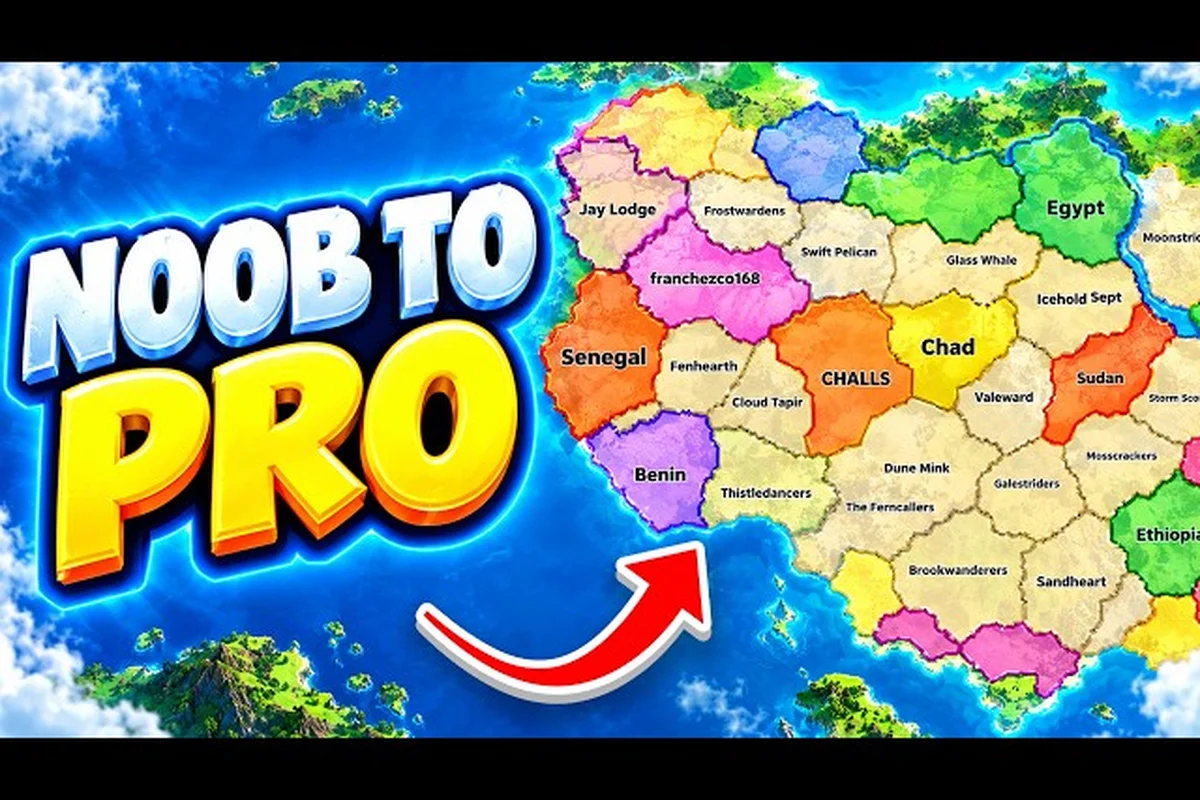
Effective roWorld coastal defense depends on controlling shoreline access before an enemy can establish a bridgehead. Build a layered plan around naval positioning, troop readiness, nuclear deterrence, and measured escalation: patrol choke points with the roWorld naval strategy, maintain mobile reserves for rapid reinforcement, preserve a credible roWorld first strike option, and keep second-strike forces protected. Because a localized beachhead can expand once logistics and landing craft arrive, early denial should combine interdicting supply routes, holding offshore positions, and forcing attackers to spend time under fire before committing troops.
roWorld Coastal Defense: Build a Layered Shoreline Plan
A strong roWorld coastal defense does not depend on one weapon or one wall. It creates several barriers between the sea and your capital: patrols, coastal fortifications, inland reserves, and a credible response to an invasion attempt. This matters because a player who reaches a coastal territory may threaten factories, supply routes, and nearby cities before your full army is ready.
The official RoWorld game page lists cities, ports, factories, alliances, and nuclear weapons among the game’s features. It also says that player nations and tribes share a large map, with territory control determining the match outcome. That creates several useful planning layers for roWorld coastal defense, beginning with where you place ports and how you watch the approaches around them.
Defense Layers by Position
| Position | Primary role | Main vulnerability | Best use in a defense plan |
|---|---|---|---|
| Open coastal border | Early warning and delay | Limited inland depth | Patrol, fortify, and preserve fallback routes |
| Port or harbor | Logistics and naval access | Blocked access can isolate the coast | Protect routes while monitoring nearby seas |
| Narrow coastal approach | Chokepoint control | Heavy enemy pressure | Concentrate defenses and reinforce quickly |
| Coastal city | Economic and population value | High value if captured | Keep reserves nearby and protect escape routes |
| Capital near shore | Maximum political value | Damage may affect the whole nation | Use layered deterrence rather than a single defense |
A good plan does not treat every coastal tile as equal. A narrow harbor, a wide beach, and a city beside the capital create different problems, so each needs its own response. The table gives a structural way to compare them without inventing unsupported damage values or unit statistics.
The First Coastal Checklist
Before an invasion, confirm that your strongest land units can move inland without passing through exposed shoreline tiles. Keep factories and cities supported by a dependable troop-production plan, and identify which port or coastal route serves as your primary supply connection.
You should also decide what constitutes an early warning. A fleet spotted near your border, a sudden land transfer, or a rival’s sudden production surge can each trigger a different response. The roWorld troop movement guide explains how to organize those reserves so that a warning produces action rather than confusion.
roWorld Naval Strategy: Control the Approaches
Naval strategy begins with denying an enemy a safe landing area. In roWorld naval strategy, the goal is not to scatter ships without a clear purpose. It is to preserve access to your own ports, monitor likely invasion corridors, and force an attacker to spend time and resources entering a defended zone.
RoWorld’s public materials confirm that ports and nuclear weapons exist, while detailed ship costs, ranges, damage values, and build requirements remain unpublished. Coastal planning should therefore rely on positioning and decision order rather than invented numerical breakpoints. For example, a first strike should target access to enemy ports before defensive ships can disperse into an estuary, while a second strike reserves nuclear weapons for the clearest invasion corridor instead of spending them on a distant, uncertain target. This sequencing also preserves the player’s own ports and makes every ship assignment answer a specific coastal-defense problem.
Patrol Priorities
Patrols should answer three operational questions: where could a hostile fleet approach, which local assets would it target first, and how quickly could your land response reach the threatened area? Focus patrols on likely corridors instead of covering every stretch of water, because scattered attention can leave the most important approach unguarded.
| Patrol type | Strength | Limitation | Operational purpose |
|---|---|---|---|
| Harbor guard | Protects immediate port access | Narrow coverage area | Detect local intrusions and escort logistics |
| Coastal screen | Warns before landing | Can be stretched too thin | Monitor the shoreline facing the rival |
| Fleet concentration | Stronger deterrent | Slower to reposition | Guard a vital approach or capital |
| Mobile reserve | Responds to changing threats | Depends on route quality | Reinforce an active breach or threatened port |
| Deterrent patrol | Makes an attack look expensive | Does not replace real defense | Discourages opportunistic landings |
Patrol priority is more useful than a fixed patrol route. Shift ships toward unusual movement, newly built enemy structures, or a neighboring port that has gone quiet, because a sudden absence of traffic can be just as revealing as a visible fleet.
Port and Harbor Control
Your own ports are logistical assets and potential targets. Keep a route inland that remains useful even if the harbor is lost, and avoid stacking every defense around one busy harbor. Redundancy matters when the same coastal corridor connects your port, factories, and cities.
The roWorld naval invasion breakdown provides useful context for how attackers may use vessels, transport routes, and threats such as missiles or aerial attacks. Use that information to test your own assumptions rather than treating an attacking guide as a complete defense checklist.
A practical roWorld naval strategy follows three stages: screen, deny, and reinforce. Screen the coast for signs of preparation, deny the most plausible landing corridor, and reinforce the exact point where enemy action becomes credible. This creates a decision tree that remains useful even when the game does not publish exact fleet statistics.
roWorld Nuclear Strategy: Use Deterrence, Not Panic
Nuclear weapons are a confirmed RoWorld feature, so they belong in strategic planning, but their exact yields, ranges, build requirements, and costs are not publicly stated. A credible roWorld nuclear strategy therefore focuses on decision logic, escalation, and the consequences of revealing your plans.
The strongest deterrent is often the credible possibility that an attacker will face a damaging response, not the immediate use of a weapon. Placing or revealing nuclear capacity can encourage a rival to reconsider a marginal invasion. However, treating every border incident as a nuclear emergency may waste deterrence and destabilize the wider match.
Escalation Ladder
| Signal or event | Recommended response | Strategic purpose |
|---|---|---|
| Routine coastal patrol | Conventional positioning | Avoid treating normal movement as an invasion |
| Repeated border probing | Strengthen patrols and reserves | Confirm whether an attack is being prepared |
| Encamped hostile force | Mobilize land units and preserve fallback routes | Delay and make a landing more difficult |
| Confirmed landing attempt | Counter with concentrated force | Defeat the bridgehead before it expands |
| Severe existential threat | Consider nuclear use if available and justified | Preserve the nation at the highest escalation level |
| Attack repelled | Rebuild, rotate units, and reassess | Preserve strength for later attempts |
This escalation ladder keeps nuclear deterrence proportional to the threat by tying that option only to a severe existential threat, not to routine patrols or border probing. That graduated structure is crucial for roWorld coastal defense: a conventional response can contain a landing force before it becomes a strategic crisis, while roWorld first strike and roWorld second strike options remain tied to clearly defined triggers. For example, strengthening patrols and reserves after repeated border probing preserves information and fallback routes without signaling that a confirmed invasion is underway. This reduces the risk of accidental escalation when neighboring nations are merely testing borders or entering unclaimed territory, while also making roWorld naval strategy harder to misread.
Deterrence and Second-Strike Logic
A durable deterrence plan assumes the enemy may discover your first defensive move and still attempt to attack. That is where roWorld second strike planning becomes relevant: reserve the ability to respond after the initial battle, even if your front line has been damaged, your capital is threatened, or your first defensive wave has been committed.
Prepare a second-strike option by preserving command continuity, keeping reserve troops available, and identifying a survivable launch or defense point for nuclear assets. The official materials do not publish silo vulnerability, reload behavior, or protective rules, so avoid treating any single structure as invulnerable. The safest assumption is that visible assets can be targeted.
RoWorld first strike planning should therefore answer a different question: can you remove an imminent threat before it creates a durable enemy foothold? First-strike logic favors speed, secrecy, and concentration; second-strike logic favors redundancy, dispersion, and recovery. A sound roWorld war strategy needs both, because the first move may fail even when the plan is sound.
roWorld First Strike: Neutralize Landing Plans Early
A roWorld first strike is most useful when it interrupts preparations, not when it punishes an enemy after the invasion has already become costly. Coastal defense becomes easier when patrols identify a staging area, land forces move before a bridgehead solidifies, and the enemy must reconsider its approach.
The priority is to act on evidence while preserving the ability to respond if the information is wrong. A sudden fleet movement may represent a genuine landing plan, a diversion, or routine repositioning. Strong roWorld first strike planning combines military readiness with a clear rule for what kind of evidence justifies action.
Pre-Attack Decision Process
| Stage | Evidence to gather | Decision enabled |
|---|---|---|
| Watch | Fleet direction, border activity, and production changes | Identify whether preparations are increasing |
| Verify | Corroborate with land movement or territorial pressure | Distinguish an invasion plan from a diversion |
| Concentrate | Move reserves toward the threatened corridor | Increase resistance at the likely landing point |
| Interrupt | Disrupt staging or landing preparations | Prevent a stable bridgehead |
| Consolidate | Secure the coast and restore supply links | Convert a local success into a stable defense |
Early disruption is valuable because each action by the enemy—moving ships, massing troops, or beginning a landing—may reveal more about the attack than waiting at the capital does. However, overreaction has a cost: a badly placed reserve can leave another border open and give the opponent a second opportunity.
Timing Without Fake Precision
Do not invent a countdown or assume that a specific ship count guarantees a landing. Timings may vary, and the game’s public information does not define a universal preparation period. Base timing on visible staging, troop production, and the vulnerability of your coastal assets.
For broader decision-making, the complete RoWorld war planning guide can help connect coastal timing with production and attack opportunities. The key is to test your first-strike plan against three questions: What evidence is required? Which force can reach the coast in time? What remains if the strike fails?
roWorld War Strategy: Defend Several Routes at Once
Rivals can pressure an entire coastline at the same time, so roWorld war strategy should not depend on one perfect prediction. A layered defense accepts that some territory may be lost temporarily and focuses on preserving the connections needed to reclaim it. This is particularly important because the official game page identifies factories, cities, and ports as important features of a larger territorial conflict.
The objective is to define priorities before a crisis: which city cannot be lost, which factory supports the most valuable defense, which port connects the interior, and which route offers a safe retreat. Without those decisions, troops can scatter in response to every visible threat.
Priority by Situation
| Situation | First priority | Secondary priority | Avoid |
|---|---|---|---|
| Early invasion | Delay the landing | Preserve the interior | Chasing every enemy unit |
| Capital exposed | Secure the capital | Restore nearby cities | Leaving all reserves elsewhere |
| Factory threatened | Protect production | Reassign defenders | Disrupting the entire economy |
| Port under attack | Maintain supply access | Defend nearby settlements | Depending on one harbor alone |
| Multi-front pressure | Choose the main front | Rotate reserves | Spreading troops until none are strong |
A single decisive front is more valuable than several weak reactions. The RoWorld territory and expansion overview is useful for understanding why land control, cities, and resource access affect the wider conflict. Coastal defense should protect the territory that makes that system work, rather than treating every tile as equally important.
Escalation and Diplomacy
Alliances and negotiations can complement a military defense, but they should not replace one. Shared pressure may discourage an invasion, yet an ally may be busy, delayed, or focused on another border. Keep the defense viable if promised support never arrives.
The same caution applies to nuclear threats. Publicly implying escalation can influence a rival, but excessive threats can also drive opponents to unite against you. Use deterrence when your military position is credible; otherwise, improve readiness before making promises that create pressure you cannot sustain.
Put the Defense Plan Into Practice
A written plan becomes useful when tested under time pressure. Choose a likely invasion corridor, write down the warning signs, identify the force responsible for each response, and define the condition that moves the plan from monitoring to active defense.
The verified Torrey Pines creator group for RoWorld is a useful official community reference, although players should treat balance changes there as unconfirmed unless they also appear on the official game page. This distinction matters because exact unit performance and upgrade values can change without notice.
Coastal Defense Rehearsal
| Preparation step | Question to answer | Result after rehearsal |
|---|---|---|
| Map the coast | Which approaches can support a landing? | A short list of realistic threat routes |
| Mark assets | Which cities, ports, and factories matter most? | Clear protection priorities |
| Assign forces | Which units respond to each warning? | Reduced delay during the first alert |
| Plan fallback | Where can defenders regroup if the line breaks? | A recoverable defense instead of collapse |
| Set escalation rules | What evidence justifies stronger action? | Consistent decisions without panic |
| Review afterward | What did the attacker exploit? | A stronger plan for the next attempt |
A rehearsal can be performed mentally without attacking another player. Map your current coastline, choose the most plausible rival approach, and describe the response in plain language. This also helps reveal hidden weaknesses, such as a capital connected to a threatened port by one road.
Practical Warning Signs
Watch for fleet concentration, synchronized land movement, and border pressure near a production area. One signal may be harmless, but several together deserve preparation. Do not report those patterns as guaranteed attack indicators because community observations are not official rules; treat them as prompts to verify and adjust.
Finally, review your plan after every major territorial change. A coastline that was secure before a new port or city appeared may offer a completely different invasion route. A good roWorld coastal defense evolves with the map, the economy, and the behavior of neighboring powers.
Frequently Asked Questions
What is the best approach for roWorld coastal defense?
The best approach layers naval patrols, coastal fortifications, inland troop reserves, and a protected retreat route. No single placement can cover every invasion angle, especially when ports, cities, and factories sit near the shoreline. Prioritize vulnerable approaches, keep mobile troops available, and use nuclear deterrence as escalation rather than an automatic response.
When should a player use nuclear weapons in RoWorld?
Reserve nuclear weapons for severe threats that conventional forces cannot contain, especially when a large invasion threatens the capital or key production centers. Since exact ranges, costs, and effects are not published, plan from observed game behavior rather than unsupported numbers. A credible deterrent may be useful before launch, but escalation should remain deliberate.
How does a second-strike plan differ from a first strike?
A roWorld first strike seeks to disrupt an attack before it becomes secure, prioritizing speed, concentration, and favorable timing. A roWorld second strike assumes the opening defense may fail and preserves the ability to respond later through reserves, fallback routes, and surviving deterrence assets. Strong plans keep both options open.
Should coastal defense focus on ports or land units?
Focus on both. Ports sustain naval access and supply, while land units determine whether attackers can expand after landing. If resources are limited, protect the coastal city, factory, or port with the highest effect on your wider war effort, then reinforce the surrounding routes rather than overloading one location.
Can alliances replace a coastal defense plan?
No. Alliances may discourage an attack or divide an opponent’s attention, but they cannot guarantee timely support. Build a defense that remains effective if an ally is occupied elsewhere, and use alliances to strengthen that plan rather than serving as its foundation. Maintaining internal supply routes and mobile reserves remains essential.