
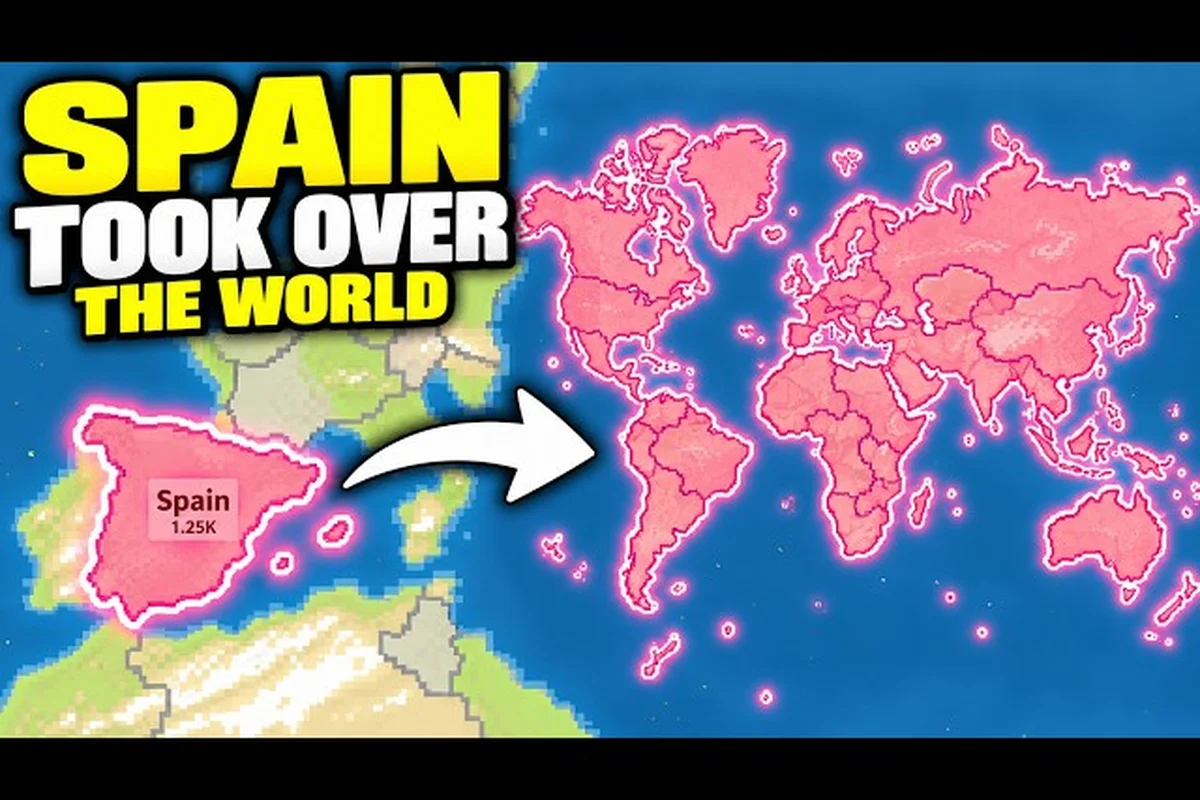
France provides a western-European position with several viable expansion routes, but the opening choice affects research_report 3b terminology, resource access, and border pressure. A coastal start can secure trade income and early sea control, while an inland start offers more land to develop but may delay access to strategic resources. Because research_report 3b flags frontier pressure and expansion timing as important early variables, players should assess the first threatened province, income stability, and army recruitment before committing to a long-term victory plan.
Why roWorld France Is a Strong Opening Choice
France works well for players who want flexibility without giving up access to the sea. Its western location can create early options for coastal development, while its inland neighbors provide room to contest territory. The advantage is not a published national bonus; it is the map geometry surrounding France on the shared world map.
The official RoWorld page on Roblox confirms the core format: 88 player nations and hundreds of tribes share the map, while a match supports up to 55 players. The victory condition is control of 80% of the world. That scale makes the first decision less about winning a single fight and more about choosing a stable region where you can build an economy before larger powers arrive.
| Opening consideration | Why it matters for France |
|---|---|
| Coastal access | Supports a ports-and-boats development path and creates several defensive angles |
| Inland expansion | Offers space for cities, factories, and land troops |
| Neighbor pressure | Bordering powers can expose weaknesses if expansion outpaces development |
| Starting position | Determines which directions can be secured before the map fills |
France’s Strategic Identity
France should be treated as a balanced expansion position. It is not automatically the strongest nation, and the official listing provides no national modifiers, troop multipliers, income rates, or rankings. Its value comes from geography and the player’s ability to use that geography efficiently.
A strong France opening normally combines three priorities: a defensible capital-centered economy, early control of a useful coastal area, and measured inland expansion. Because France has no national modifier or ranking advantage, the opening depends on settlement adjacency, resource-chain coverage, and travel time rather than a special bonus. For example, securing a coastal settlement with a reliable port and nearby production gives the capital more economic options without requiring an exposed march across the map. This makes France a balanced expansion position, distinct from speed-focused openings such as roWorld Japan or roWorld Indonesia, where geography may support different priorities.
-
Establish a reliable economy around the capital and nearby settlements.
-
Secure the nearest useful coastline without overextending into distant seas.
-
Expand inland in a controlled direction, ideally while neighboring alliances remain uncertain.
The early build should favor consistency. A player who owns several connected settlements and a functional production chain will usually have more options than one who rushes far ahead with an exposed capital. For broader beginner systems, use the RoWorld beginner guide to establish the basic loop before optimizing France specifically.
What Makes the Opening Different
The key difference between a good and poor France run is timing relative to neighbors. Some servers generate an open western front, while others place active players close to French territory. Do not assume the same opening every match. Check neighboring activity, coastline access, and unclaimed land before locking into a build order.
Community footage shows a recurring structure: select a nation, place a capital, expand into available land, meet neighbors, develop the economy, and then negotiate or fight. That pattern is a player observation rather than a fixed rule, but it reinforces the need to stabilize before starting a major conflict.
Comparing France With Five Alternative Nations
For roWorld france, the opening is strongest when the map provides enough space to establish a secure territorial core before committing to wider expansion. Its coast and inland access create several viable development paths, but dividing attention between multiple fronts can expose early settlements to pressure. Compared with roWorld japan, roWorld indonesia, roWorld australia, roWorld canada, and roWorld mexico, France benefits from a more flexible mix of maritime and land-based options, making a nearby port and a dependable inland expansion route more valuable than reputation or an assumed national tier.
| Nation | Geographic strength | Main opening challenge | Best early direction |
|---|---|---|---|
| France | Coast and inland access | Multiple fronts can divide attention | Secure a nearby port, then expand inland |
| Japan | Island positioning and maritime space | Limited land can constrain expansion | Connect coastal holdings carefully |
| Indonesia | Extensive archipelago | Managing separated territories | Prioritize defensible ports and transport |
| Australia | Large coastal interior | Vast space can stretch defenses | Develop a compact core before advancing |
| Canada | Broad northern territory | Cold, sparse map space may delay contact | Build inland strength and secure resources |
| Mexico | Coastal and central access | Border pressure and uneven expansion room | Balance a coastal economy with land defense |
This is a qualitative comparison based on map position, not a published tier list. RoWorld does not release country-specific win rates, and there is no official evidence that one of these six nations has a stronger modifier than another.
roWorld Japan and the Maritime Alternative
Japan offers a distinct maritime identity. Its islands create natural separation and may appeal to players who prefer building a naval network. Compared with roWorld france, Japan can provide more natural water separation, but its expansion potential may also depend more heavily on the amount of contiguous land available.
The Japan opening works best when you can connect useful coastal territories without making every settlement equally exposed. Build a dependable capital area, secure a port, and understand the sea lanes linking your territory before expanding to remote islands. If the server gives Japan limited land, avoid committing every resource to a distant chain of ports.
| Japan decision | Better when | Main trade-off |
|---|---|---|
| Emphasize naval movement | The map has useful island chains | Less direct land pressure |
| Emphasize cities | Coastal positions are secure | Slower territorial advance |
| Expand immediately | Nearby land is uncontested | Economy may remain underdeveloped |
| Consolidate first | Neighbors are active | Gives opponents time to set up |
roWorld Indonesia and the Archipelago Challenge
Indonesia’s many islands make transportation and port placement especially important. The roWorld indonesia opening can be excellent for players who enjoy a naval build, but every disconnected settlement creates another defensive question. A distant port is useful only if it can be supplied and protected without dividing attention too thin.
Compared with France, Indonesia may offer more water-separated opportunities but greater coordination demands. The priority is to establish a main economic core, secure the closest defensible ports, and expand outward in a sequence that preserves supply routes. Avoid treating every island as equally valuable merely because it is available.
roWorld Australia and the Wide-Open Interior
Australia’s large interior creates room to build a broad territorial core. The roWorld australia opening is attractive when you want space to expand, but emptiness can be deceptive. A large footprint is not automatically efficient if it creates long defensive lines or leaves your core economy disconnected from the frontier.
France offers a more compact starting framework by comparison. Australia can reward players who establish a reliable city-and-factory network before moving far into the interior. A controlled France strategy is often less spread out, whereas Australia can become powerful when its infrastructure supports a clearly connected empire.
roWorld Canada and the Inland Approach
Canada’s position makes it a natural fit for players who want room to maneuver away from immediate coastal pressure. The roWorld canada opening can support a patient inland buildup, although expansion may take longer before it reaches densely contested borders.
This approach is especially useful for players who prefer defense and economic development over early naval action. Build enough local strength to protect the capital, then secure factories and troop-producing settlements before advancing. A broad RoWorld strategy guide can help translate that territorial plan into practical priorities.
roWorld Mexico and the Balanced Contender
Mexico provides a flexible position with both coastal and inland potential. The roWorld mexico opening can work well for a player who wants a regional build instead of a fully maritime strategy. Its main challenge is managing pressure from multiple directions while trying to protect valuable coastline.
France and Mexico both support balanced approaches, but their practical situations differ. France may be easier to defend when its nearby inland space forms a compact core; Mexico may offer useful coastal access but could face more complicated border choices. In either case, the stronger opening is the one that creates secure production before demanding more territory.
Building the First France Economy
Once France is selected, the capital should anchor a connected settlement cluster rather than a collection of isolated claims. A compact economy makes it easier to defend, supply, and expand. The official game page lists cities, ports, factories, alliances, and nuclear weapons among the available features, but it does not publish their costs, construction times, or damage values.
A strong France opening therefore begins with capital selection, but the real advantage comes from treating cities, factories, ports, and alliances as parts of one economic system rather than pursuing isolated claims. A capital placed near several connected cities can shorten the support routes needed to keep factories operating, while a port on a viable coastal route may unlock trade and troop movement. This approach gives France a defensible base for early expansion without assuming unpublished construction costs, build times, or damage values.
-
Secure the capital area so your primary settlement is not immediately exposed.
-
Identify the economic chain that links cities, workers, and factories.
-
Choose one coastal objective that improves trade or troop movement.
-
Expand only along a connected front during the first major push.
-
Reassess neighbors before committing to a distant war.
A useful France production build should be described by function, because the official roWorld France information does not provide verifiable construction costs, build times, or damage values. The city and factory construction guide explains how to connect city, factory, port, and alliance roles: for example, placing a factory within the defended settlement cluster can keep production protected, while a port positioned on a practical coastal route can improve trade and troop movement without assuming unsupported numerical bonuses.
| Building role | France opening placement | Reason |
|---|---|---|
| Capital | Central within the first settlement cluster | Protects the economy and anchors nearby development |
| City | Along a secure inland or coastal connection | Supports a coherent territorial network |
| Factory | Near defended production territory | Improves the value of infrastructure already under control |
| Port | On a useful coastal route | Supports transport and a possible naval development path |
| Military focus | Between the core and likely threat | Reduces pressure on the capital while preserving mobility |
Capital and City Placement
Place the capital where it can support several later developments, not where it merely touches the nearest border. A capital that becomes trapped against a neighbor can restrict every later decision. Leave room for cities, factories, and defense, but do not spread infrastructure so widely that production becomes hard to protect.
Community reports show that successful players generally expand in a continuous direction. That does not mean every border tile must be claimed. In fact, unclaimed land can serve as a buffer, giving you time to react to a stronger neighboring nation. The visual clarity of a compact capital region is more valuable than owning a scattered set of distant claims.
Factory and Port Timing
Factories should reinforce the economic core, while ports should open a route that matters. Building both immediately can leave the capital under-defended, yet refusing to develop either can make expansion fragile. The better approach is to identify the bottleneck. If troop supply is weak, prioritize the production chain. If movement is the problem, improve port placement and access to relevant territory.
| Current bottleneck | France response | Avoid |
|---|---|---|
| Unprotected capital | Pull resources back and improve local defense | Continuing a distant land push |
| Weak troop production | Strengthen the city-factory chain | Attacking before supply is stable |
| Disconnected settlements | Build toward a contiguous territorial corridor | Scattered claims across the map |
| Weak coastal access | Secure one port and its surrounding route | Building several distant ports too soon |
| Uncertain neighbor | Maintain a defensive buffer | Premature commitment to a large war |
Expanding Without Overextending
France becomes dangerous to play when expansion outruns economic development. The official match structure gives every major participant a reason to seek more territory, so a large early empire can attract attention before it can survive one. Expansion should therefore be organized around security, continuity, and production.
First Expansion Front
Choose one front where terrain, neighboring activity, and transport support a clear plan. A coastal front offers port and boat opportunities, while an inland front may provide a more compact territorial shape. If two fronts appear equally attractive, choose the one that lets you protect the capital while building.
The RoWorld expansion guide is useful for turning this choice into a broader campaign plan, but France should still be evaluated against the actual server. Community footage repeatedly shows players meeting neighbors early, so the map around your capital deserves regular attention.
When to Form an Alliance
An alliance can reduce pressure from a large neighbor, but it can also lock you into someone else’s main conflict. France is often strongest as a flexible pivot: enough strength to deter a casual aggressor, not so much visible power that everyone targets you.
Consider alliance value through four questions: the partner’s geographic position, the alliance’s actual activation threshold, the diplomatic consequences of committing, and France’s remaining policy autonomy. A useful comparison is a border neighbor versus a distant major power: the former can absorb pressure along France’s frontier, while the latter mainly supplies deterrence and political weight but little immediate relief. The right choice therefore depends on whether France’s strategic depth and independent growth remain viable after alliance obligations begin, rather than on the partner’s flag or reputation alone.
-
Does the partner control useful land or a transport route?
-
Is the alliance active enough to matter during an attack?
-
Will joining create a new enemy on another front?
-
Can you maintain independent growth while committed?
| Partner profile | Strategic value | Caution |
|---|---|---|
| Border neighbor | Direct protection against local pressure | May drag you into their wider war |
| Coastal power | Port access and naval reach | May compete for the same coastline |
| Distant major power | Deterrence and political weight | Offers little immediate help at home |
| Smaller nearby player | Mutual defense and manageable commitments | Could later become a rival |
| Inactive player | Symbolic alliance value | Little practical protection |
Defensive Priorities
Defense should follow the likely direction of attack. Fortify the capital approach, protect production areas, and keep enough troops near the core to respond. A single exposed line can force you to abandon distant settlements, but overbuilding one border while ignoring another creates a larger problem.
France’s coastal position makes naval threats possible, yet land pressure is often more immediate in the opening. Keep the defense plan balanced: land troops for the capital corridor, boats for sea routes, and factories for the economic chain. The early-game progression guide can help map these priorities across the opening phases.
A Match-by-Match France Opening Plan
Every server changes the balance, so use the map rather than memorizing a fixed route. The strongest roWorld france strategy begins with a short scouting phase, followed by a compact economic core, one coastal objective, and controlled inland expansion. Skip any step that conflicts with the real map.
First Five Strategic Phases
The first phase is orientation. Observe which neighboring nations build quickly, where the coastline connects to useful territory, and whether unclaimed land remains near France. Do not commit early merely because a border appears open; an empty area may be attractive to a faster-moving neighbor.
The second phase is consolidation. Build around the capital, connect nearby cities, and make your first factory decisions. The goal is not maximum building count. It is a functional center that can support the next expansion without exposing its production to a single attack.
The third phase is a controlled push. Take one connected direction, preferably toward land that can feed the core or toward a port that improves mobility. Keep the opposite border monitored. The fourth phase is response, where you adapt to diplomacy, border pressure, or an ally’s changing position. The final phase is consolidation again, converting temporary gains into protected infrastructure.
| Phase | Main objective | France-specific decision |
|---|---|---|
| Orientation | Read the match | Identify coast access and nearby threats |
| Consolidation | Build a stable core | Connect capital, cities, and factories |
| Controlled push | Gain useful territory | Expand inland or secure one port |
| Response | React to neighbors | Defend the most exposed border |
| Consolidation | Make gains durable | Connect settlements and reinforce production |
When France Should Pivot
Pivoting is better than forcing a weak opening. If France is boxed in by active powers, consider an economy-first approach and a defensive buffer. If the inland front is open but the coast is contested, emphasize factories and cities. If coastal opportunities are clear but inland neighbors are stable, develop ports and boats.
A pivot should preserve a coherent national core rather than scatter France’s resources across disconnected fronts. After a failed local defense, unresolved threats can consume the capital’s military capacity, disrupt the economy, and block the very expansion needed to recover. France should first restore security around its capital and core territory, then choose a new theater where factories, ports, or fleets can reinforce the center instead of creating a second defensive commitment.
Recommended Decision Checklist
Before committing, compare France’s intended operation with the same checklist for roWorld Japan, roWorld Indonesia, roWorld Australia, roWorld Canada, and roWorld Mexico: front strength, core HP, starting resources, city connectivity, and likely opening threats. A raid may look strong on paper, but if it leaves France’s capital exposed or consumes the army needed to defend a threatened production hub, the immediate gain can worsen the strategic position. A low-risk plan should therefore reserve enough troops and resources to respond to two pressure points at once, rather than committing every unit to one distant target.
-
Capital security: Is the core protected against a likely attack?
-
Production stability: Can cities and factories function without constant defense?
-
Territorial continuity: Are new settlements connected or defensible?
-
Route value: Does the target improve access, production, or defense?
-
Neighbor behavior: Are nearby nations building, fighting, or forming alliances?
-
Commitment size: Can the plan survive if one battle goes badly?
France Versus Japan, Indonesia, Australia, Canada, and Mexico: Final View
France is a strong roWorld france option when the match provides a balanced mix of coastline and usable inland space. It gives players more than one development route without forcing a fully naval or fully continental identity. That flexibility is useful when neighboring nations are active and the map rewards secure, connected territory.
| Nation | Best strategic identity | Main strength | Main weakness |
|---|---|---|---|
| France | Balanced continental power | Coast plus inland options | Attention can be split across fronts |
| Japan | Maritime island builder | Natural separation and sea routes | Land expansion may be limited |
| Indonesia | Archipelago power | Numerous coastal positions | Supplying distant ports is demanding |
| Australia | Wide continental builder | Room for a large connected core | Long lines can strain defense |
| Canada | Patient inland power | Space away from dense coastal action | Contact may come later |
| Mexico | Flexible regional contender | Coastal access and inland options | Border choices can become demanding |
Japan, Indonesia, Australia, Canada, and Mexico can all outperform France in a particular server, but their relative strength depends entirely on map conditions. There are no official country tiers, cost tables, or win-rate statistics to support a universal ranking. The roWorld japan option may dominate when islands are plentiful; the roWorld indonesia choice may thrive when ports are secure; the roWorld australia opening can dominate when the interior is open; the roWorld canada route benefits from distance; and the roWorld mexico opening is attractive when coastal and central space align.
France’s advantage is adaptability. Select it when you can establish a compact capital, protect a single coastline, and expand along a connected front. If the map offers a clearly better maritime or inland route, choosing France purely for familiarity could waste the opening. A smart nation choice follows geography, production, and neighbor behavior—not an unsupported tier label.
Frequently Asked Questions
Is France the strongest nation in RoWorld?
France has no officially published modifier that makes it the strongest. Its main advantages are its coastal access and connected inland expansion options, while its risks include pressure from several borders. A clean opening matters more than the nation’s reputation because each server generates different neighboring powers and territorial opportunities.
Is roWorld japan better than roWorld france for beginners?
Japan may be easier for beginners who prefer a maritime identity, but it can be harder to expand when land is limited. France offers inland and coastal choices, which makes it a flexible starting point. Compare available islands, neighboring activity, and port access before deciding; neither country has an official win-rate advantage.
Should roWorld indonesia focus on ports or cities?
The balance depends on whether your territories can be supplied and defended. Ports become valuable when they connect useful settlements and sea routes, while cities remain necessary for a stable mainland economy. Avoid scattering resources across distant islands before establishing a secure capital region and a dependable production chain.
Is roWorld australia a safer choice than France for expansion?
Australia can offer more interior space, but a large territory may create long defensive lines. France can provide a more compact base when its nearby land is available. Safety depends on how quickly you establish infrastructure and where active players begin, so map position matters more than the country label.
How should roWorld canada and roWorld mexico be compared?
Canada favors a patient inland strategy with room away from coastal crowding, while Mexico combines coastal and central development options. Compare their immediate neighbors, coastal security, and available production sites. A defensive Canada opening can be strong when early contact is slow, while Mexico can thrive when its connected territory remains secure.